- Final Major Projects – Bachelor of Environmental Design
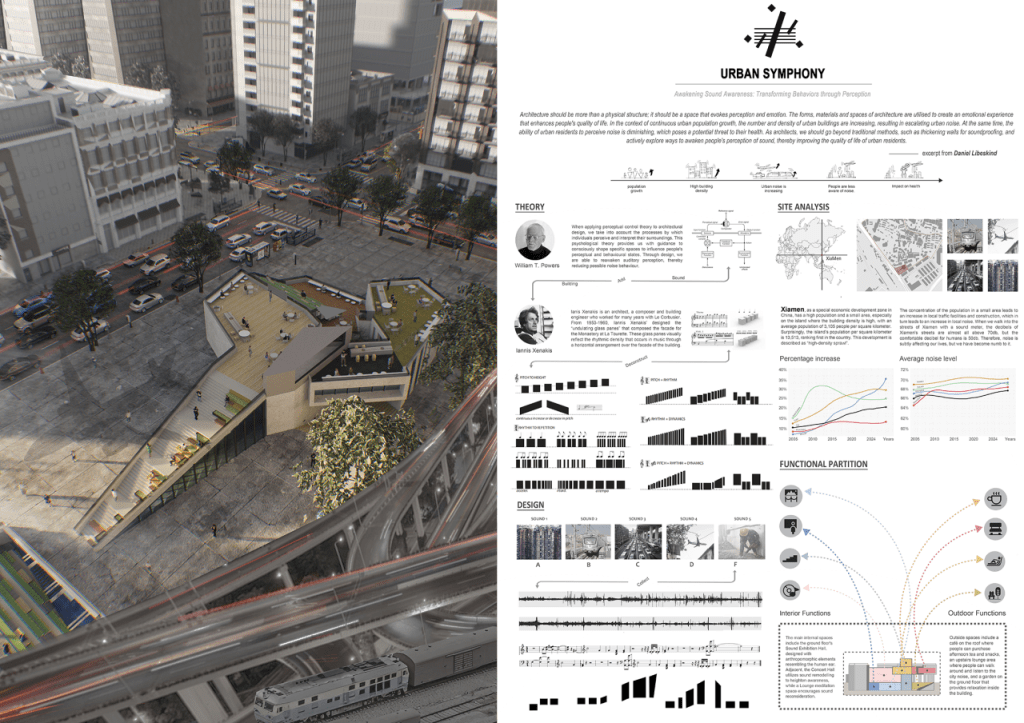
“Urban Symphony” by Xu Tianming
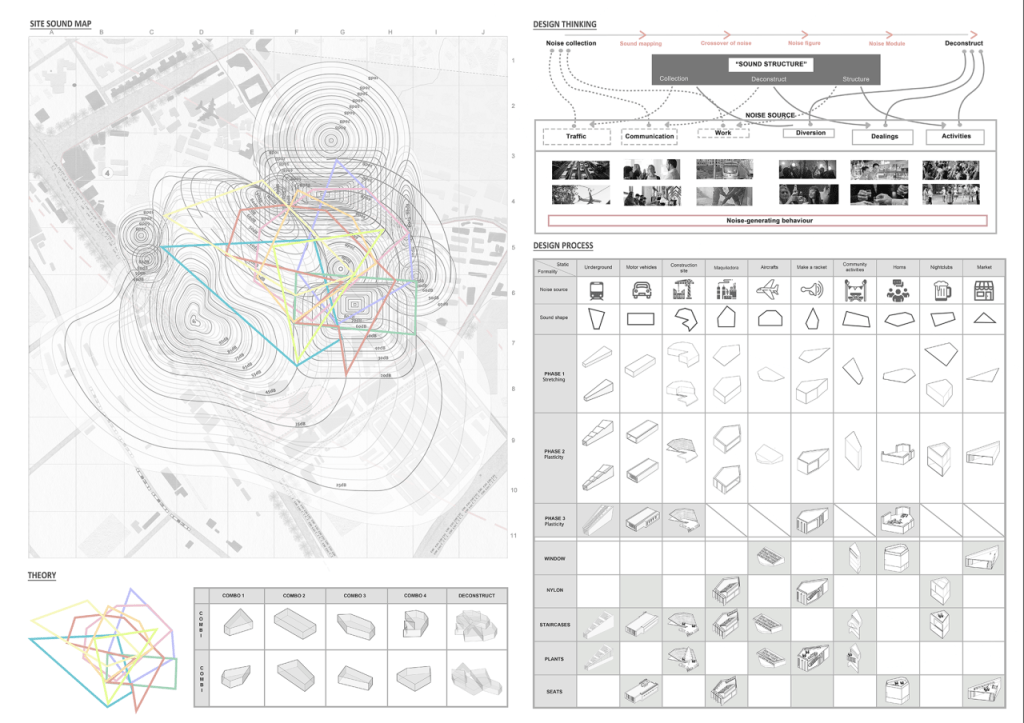
In the context of continuous urban population growth, the number and density of urban buildings are increasing, resulting in escalating urban noise. Simultaneously, the ability of urban residents to perceive noise is diminishing, posing a potential threat to their health. This initial observation by Xu Tianming was highly relevant, particularly in the context of Xiamen Island, a special economic development zone in China, experiencing significant demographic growth in a confined area. Instead of seeking solutions through structural and material alternatives, Xu Tianming’s observation and site analysis focused on raising citywide awareness of surrounding noise pollution. His goal was to remind residents to acknowledge the noise and silence they have grown accustomed to ignoring.
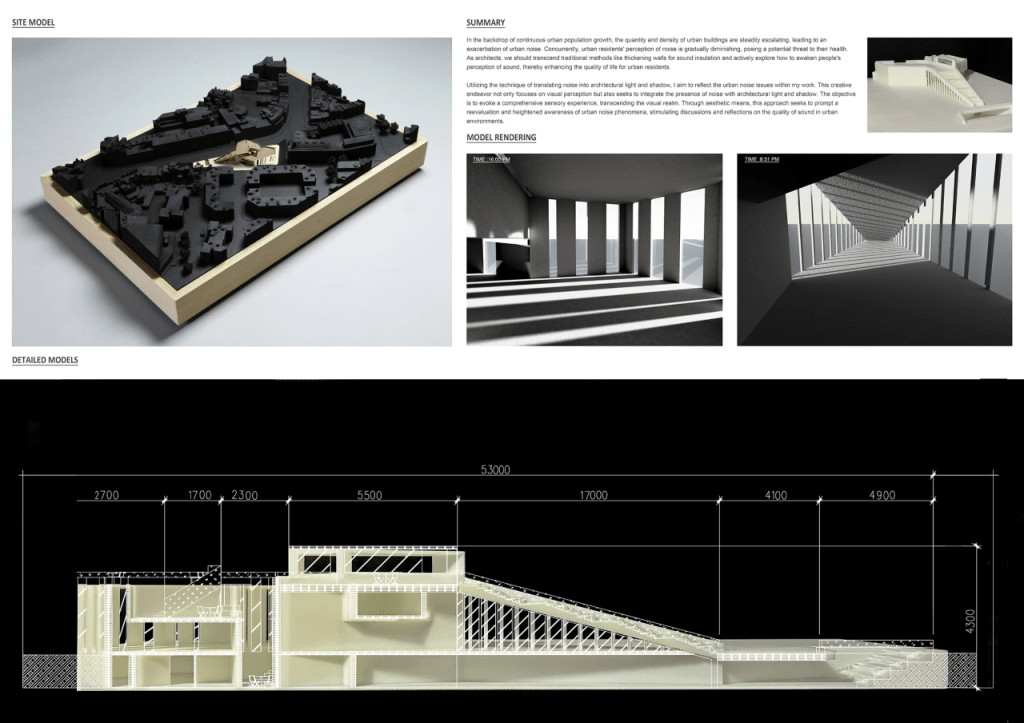
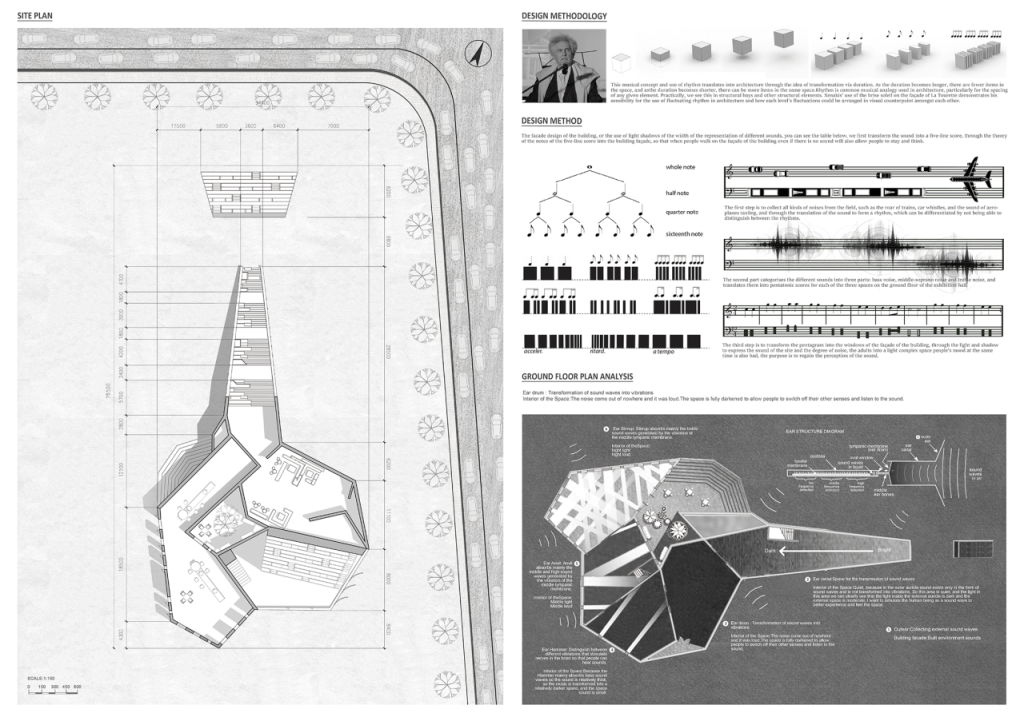
He employed a research-by-design method, starting with a sensory map of the project site, deliberately chosen next to a highway and close to an airport. Through a series of in-depth studies and analyses, Xu Tianming explored the architectural biology of the ear and the different high and low sound frequencies. This series of drawings, mappings, and modeling led to the final form of the project.
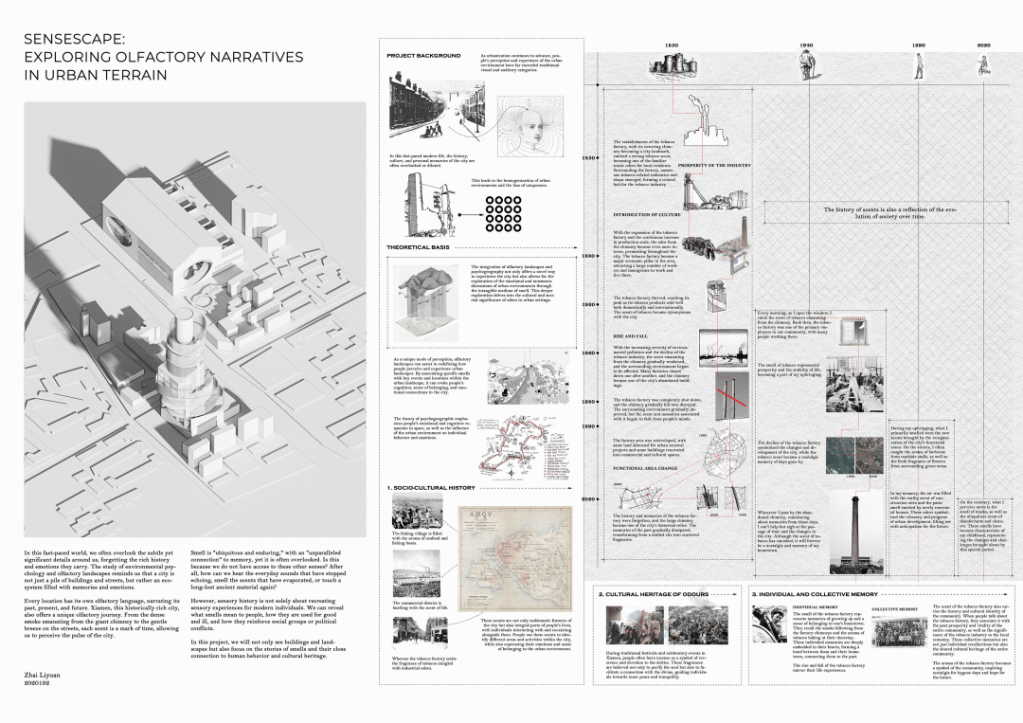
“Sensescape: Exploring Olfactory Narratives in Urban Terrain” by ZHAI Liyuan
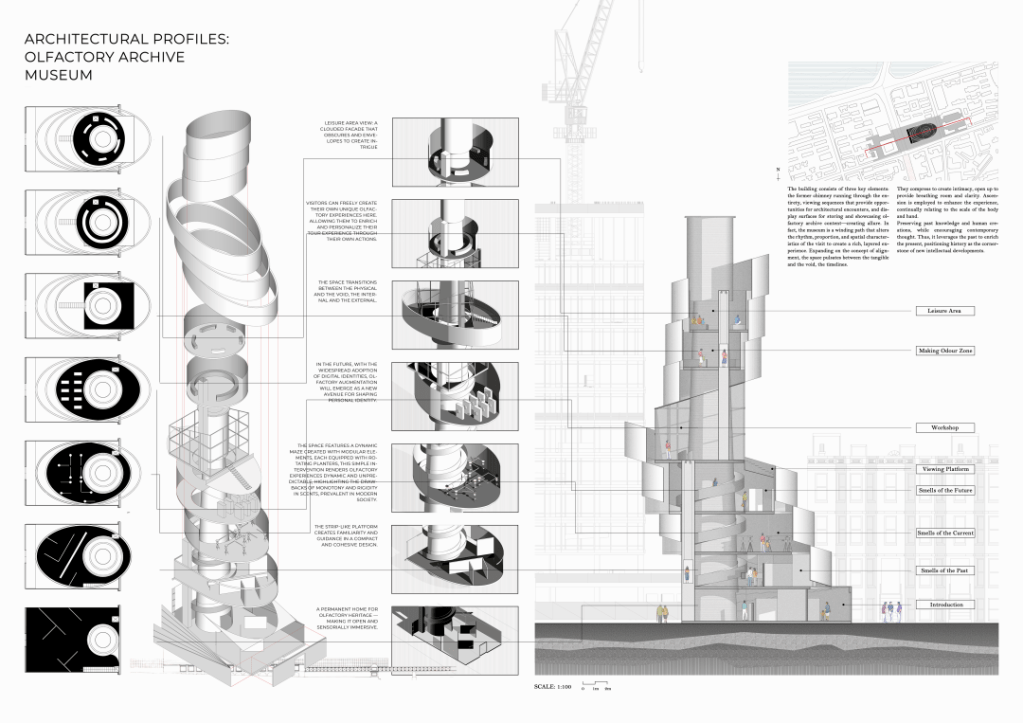
Zhai Liyuan’s project explores the often-overlooked aspects of our fast-paced world, emphasizing the rich history and emotions carried by subtle details around us. Her study of environmental psychology and olfactory landscapes reveals that a city is more than just a collection of buildings and streets; it is an ecosystem filled with memories and emotions. Sensory history, in this context, goes beyond recreating experiences to explore the meanings of smells, their uses, and their role in reinforcing social cohesion.
Through psychogeographic mapping and drawing, Zhai Liyuan created a series of mappings related to the memory and smell of the project site, clarifying the design narrative. By employing adaptive reuse strategies and revitalizing the project site, Zhai Liyuan’s material choices and visual communication between architectural elements and the micro-scale urban design aimed to restore past values to residents’ lives. While her critique addressed Xiamen’s rapid redevelopment, the architectural language in her design remains distinctly modern, showcasing the potential for thoughtfully applying modernization in urban settlements.
- Third-Year Bachelor of Environmental Design and Reuse
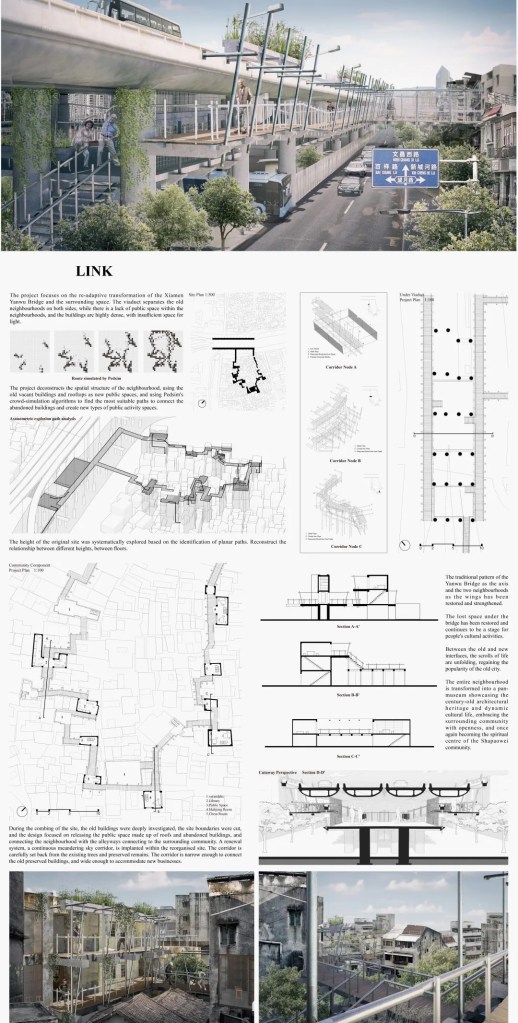
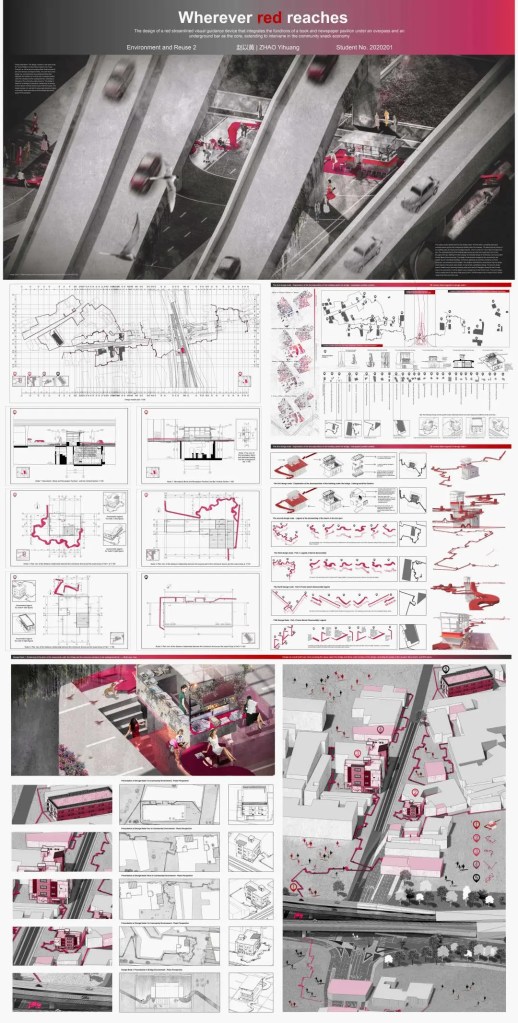
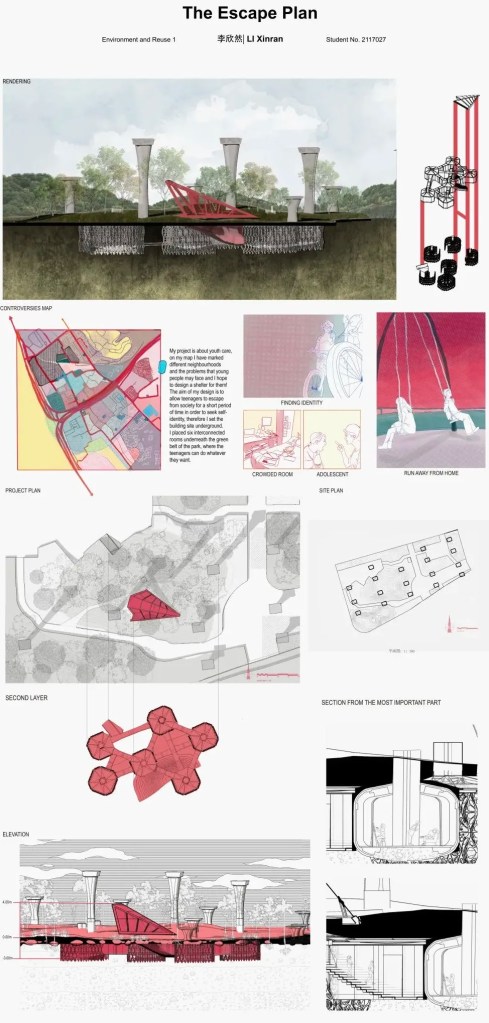
The concept of ‘reuse’ has deep ties to tradition, collective memory, and social practices encompassing crafts, thoughts, and rituals. This unit sets the project site at the southern end of the Yanwu Bridge near Shapowei on Xiamen Island, exploring various viewpoints on ‘reuse’ from architecture, art, history, and ideas. This unit organises visits to the region. In phase 1, students’ task is to map controversies, identifying the involved people, events, daily life of humans and non-humans’ actors, and revealing the complex diversity around the Yanwu Bridge. The purpose of mapping controversies is to support a complex design project that proactively investigates a wide range of environmental and social issues around a design brief and resolve it through an experimental and iterative process, furthermore support and develop discussion and argument skills that can visually demonstrate well-reasoned and considered resolutions to design problems.
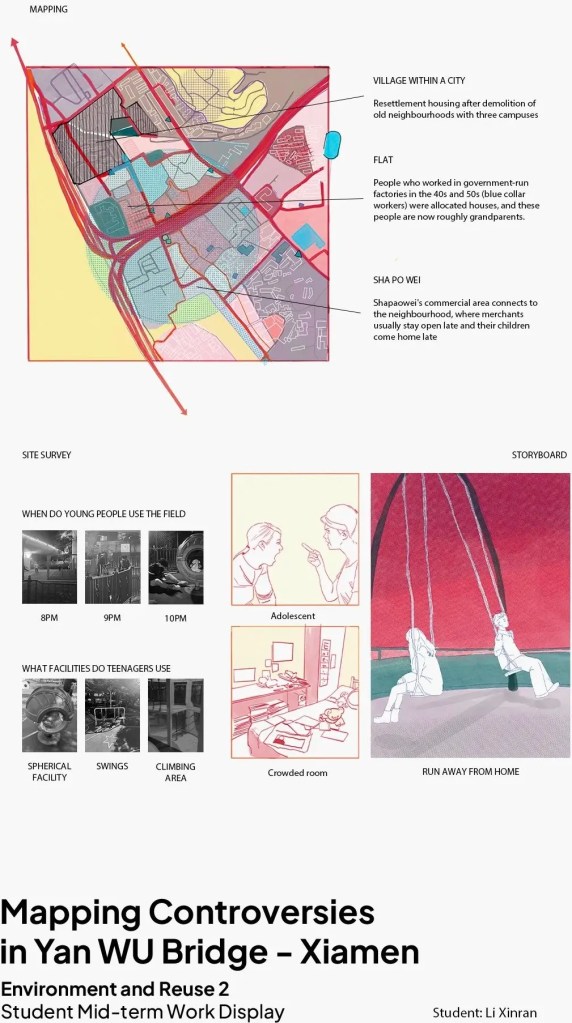
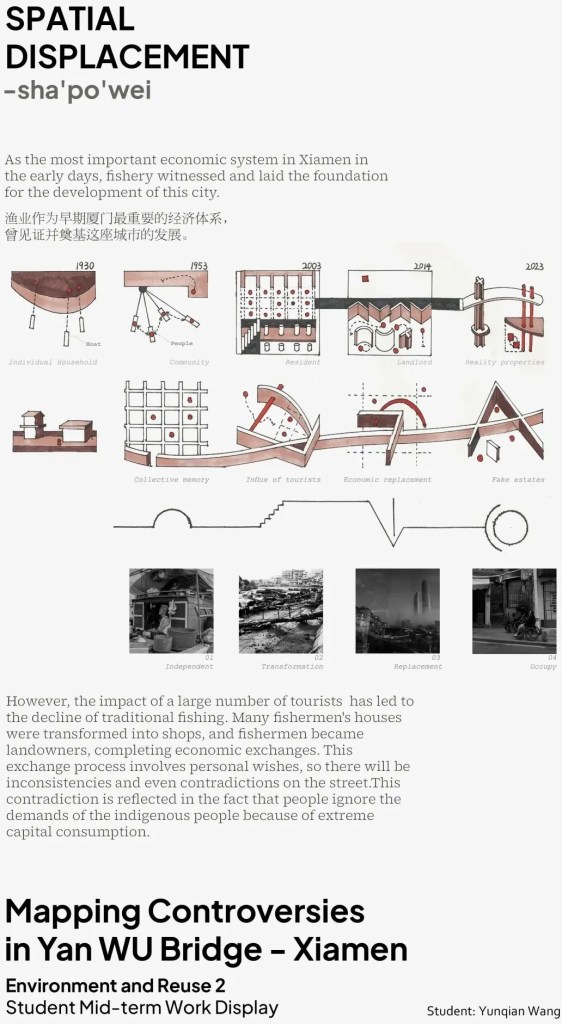
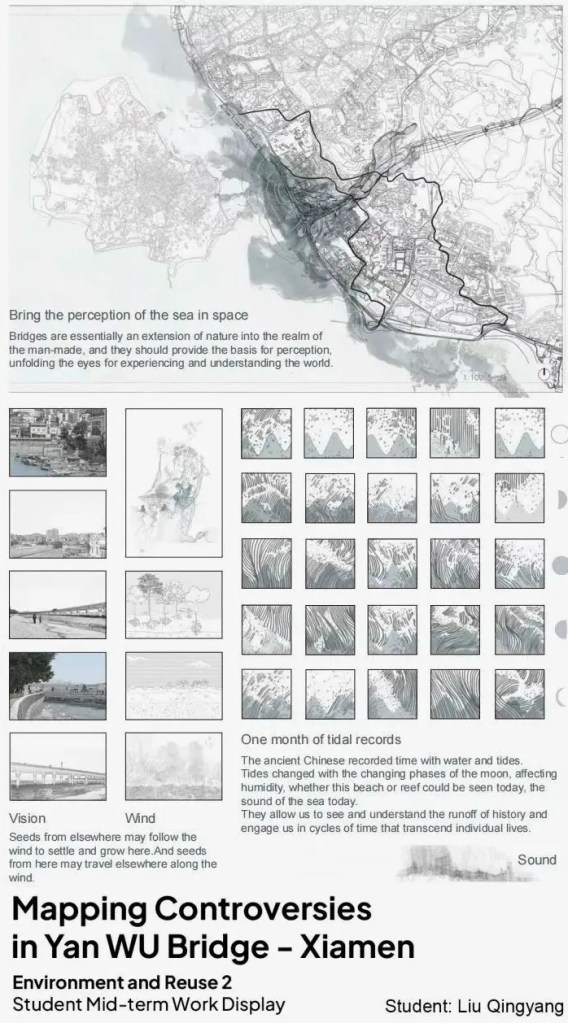
In Phase 2, through mapping controversies, students propose an individual design project for repurposing the bridge. Their proposal reflects a complex ecology rather than a static object, and navigate the intricate reality of the existing bridge, transforming it into a defined form and space.
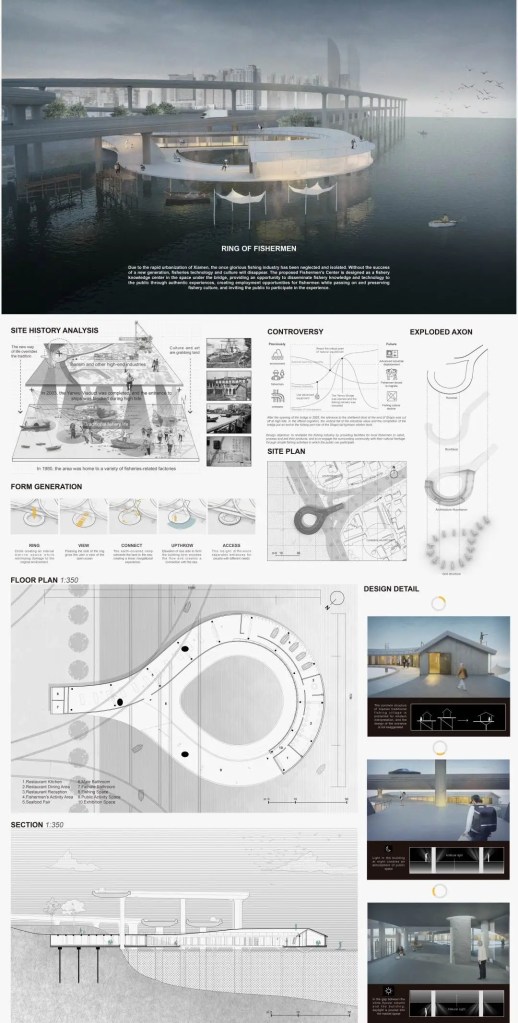
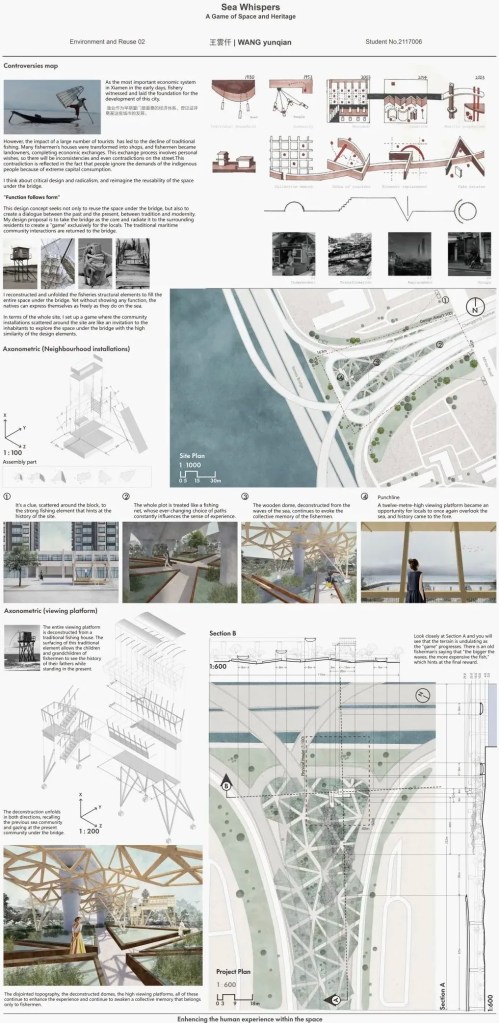
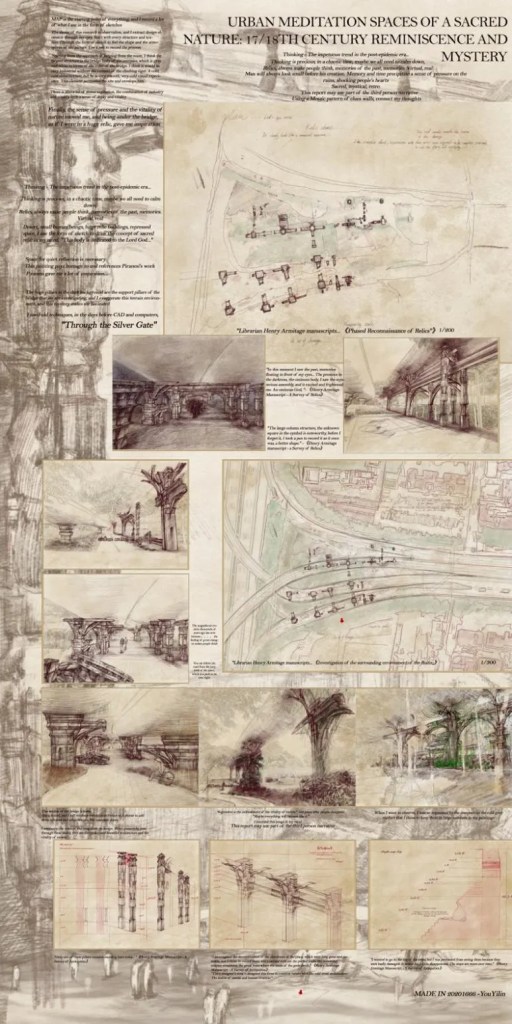
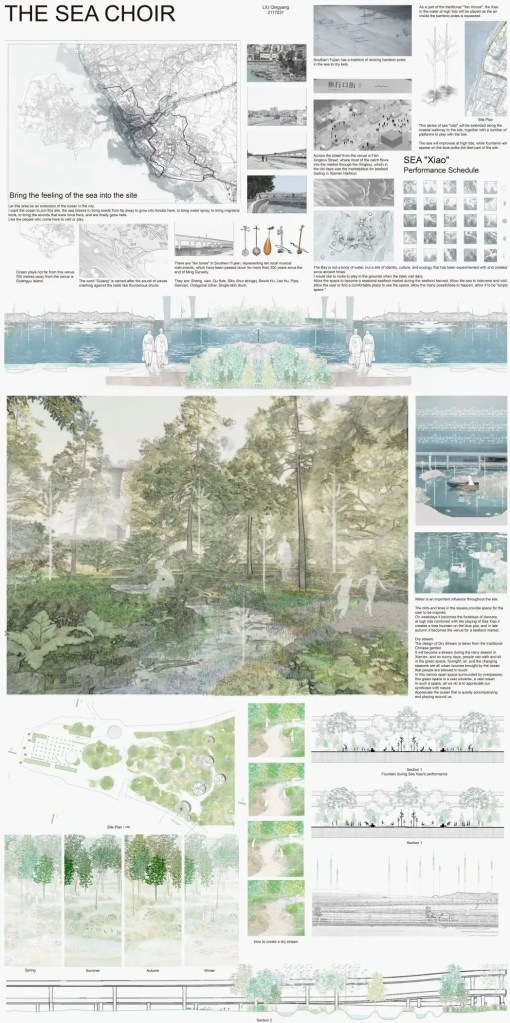
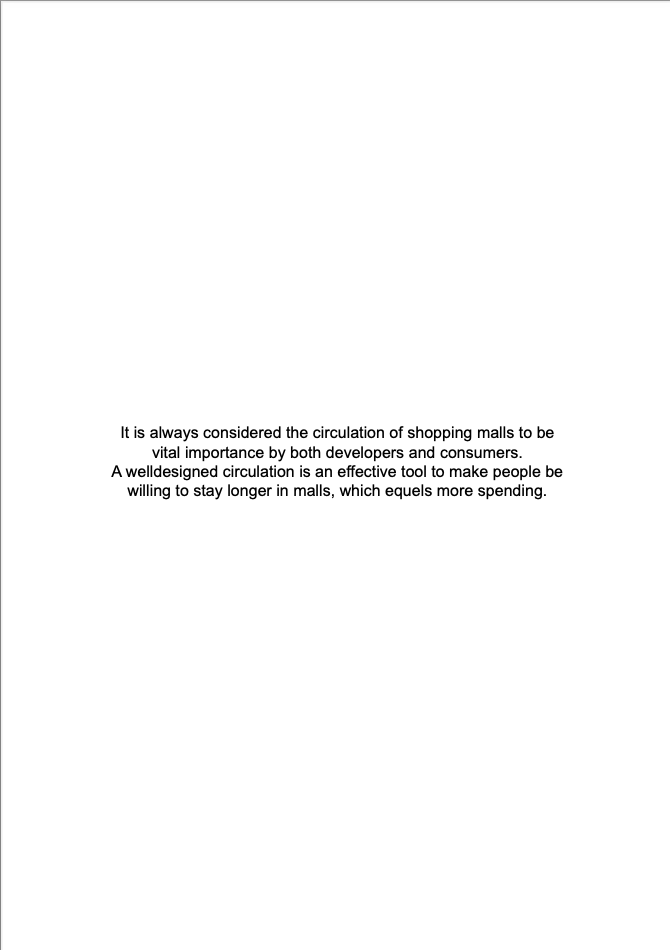
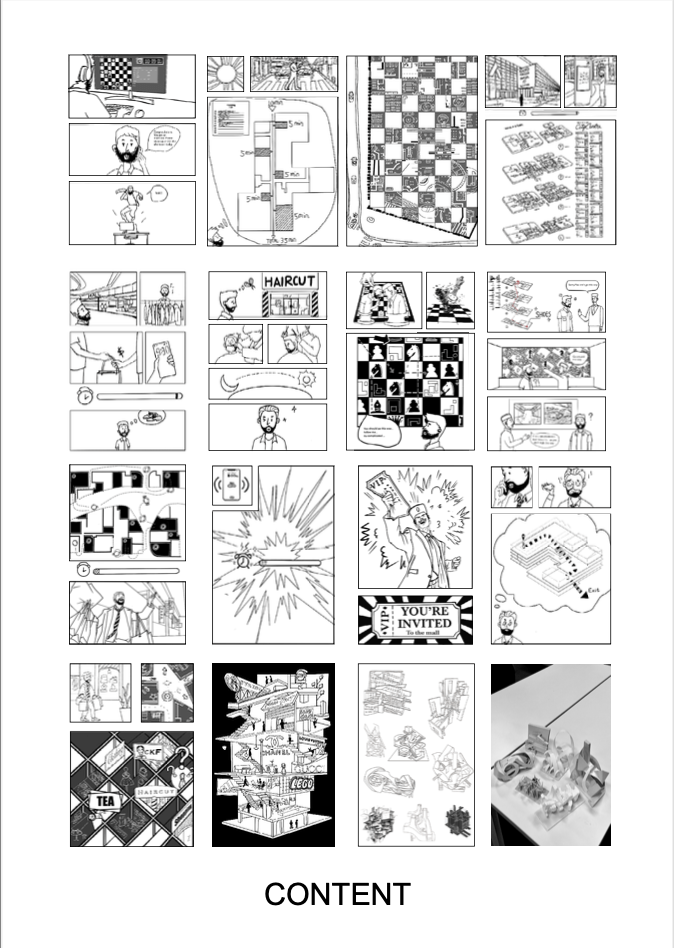
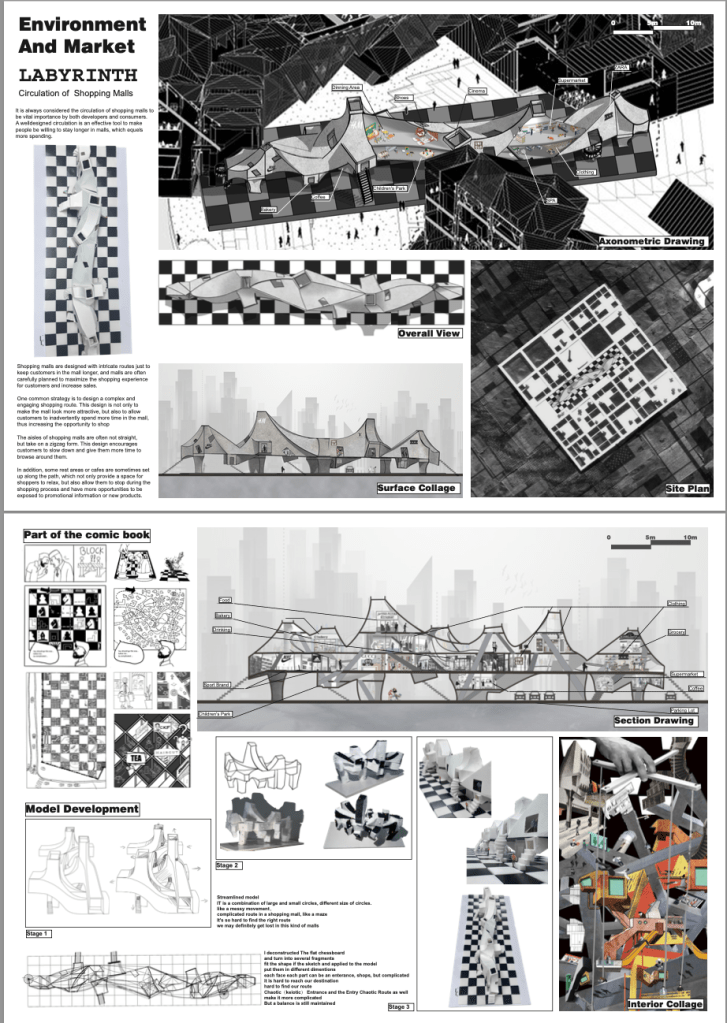
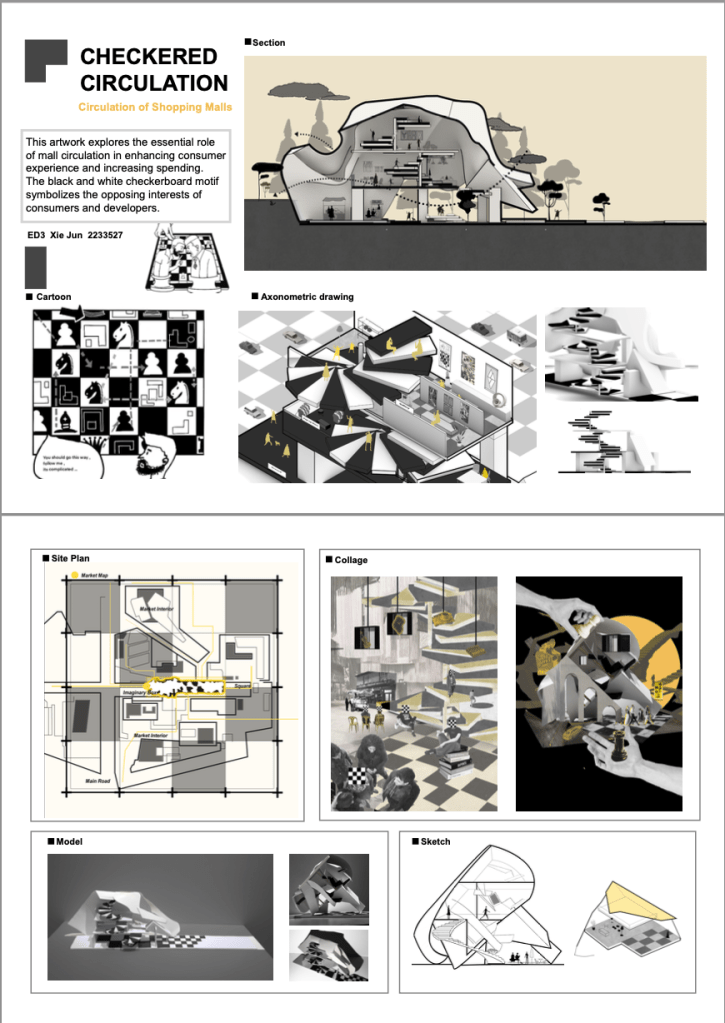
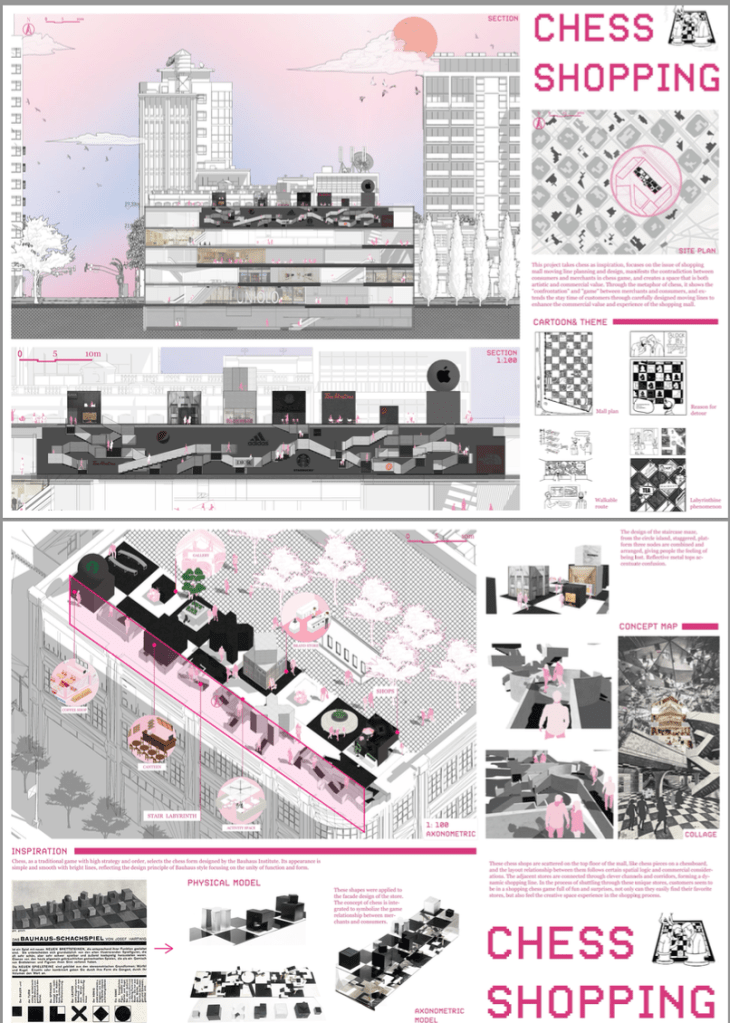
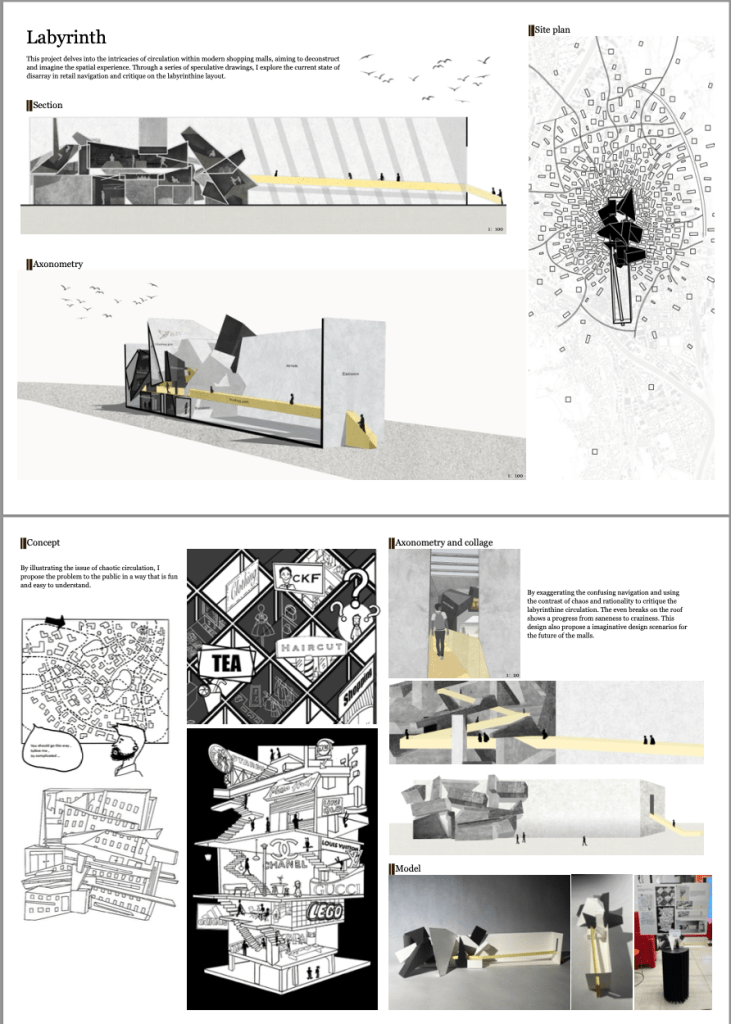
- Third-Year Bachelor of Market and Environment: Speculative Design of a Shopping Mall
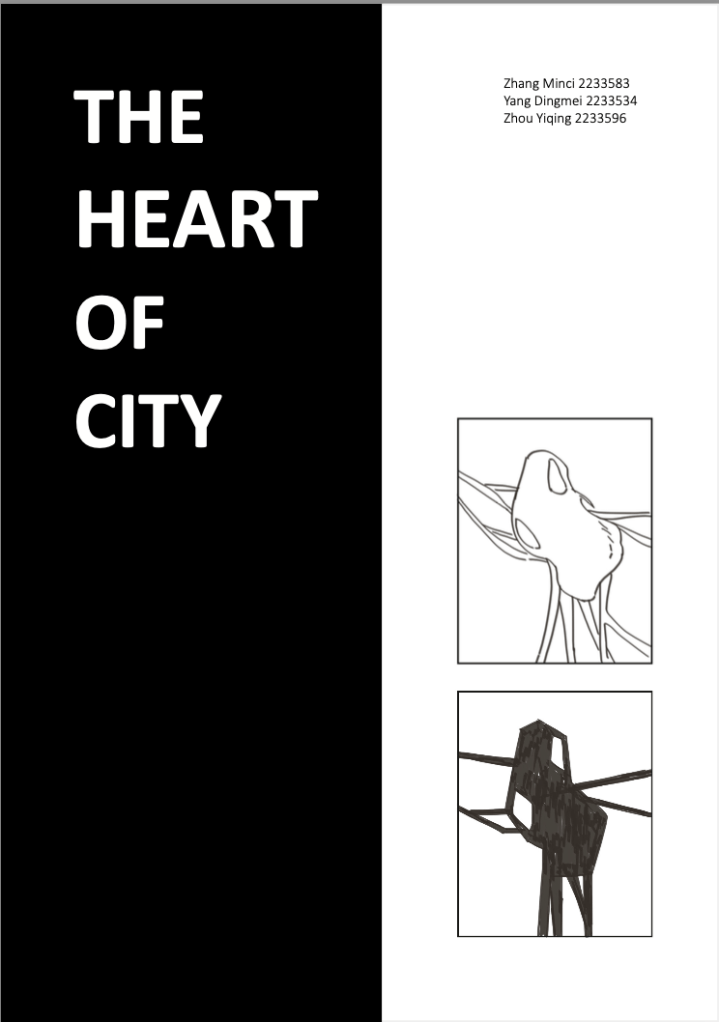
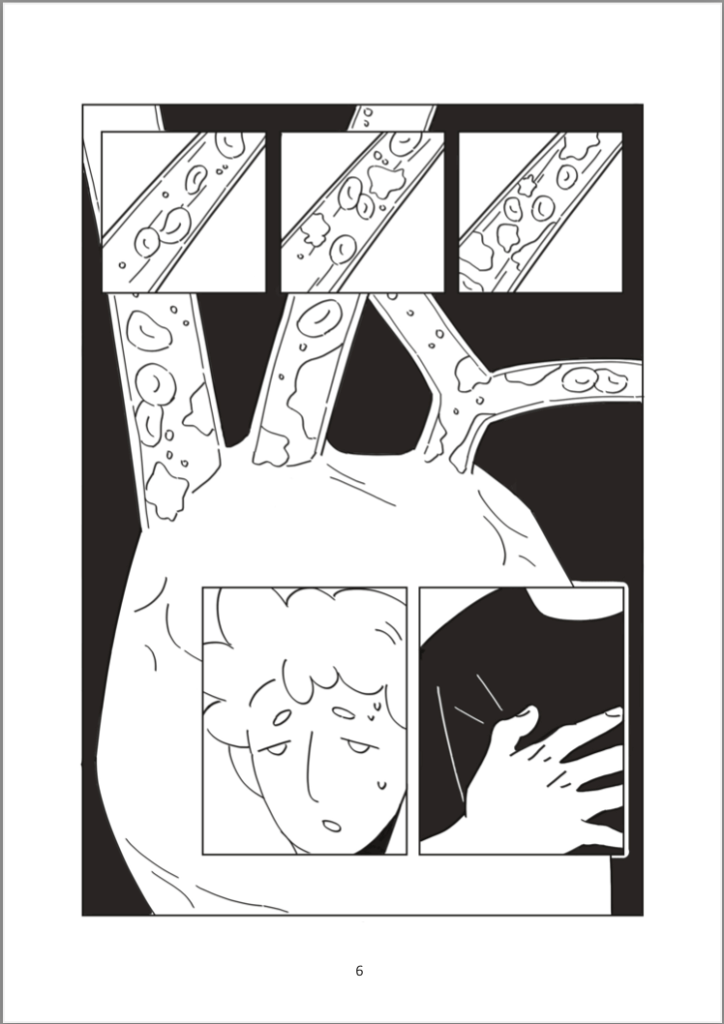
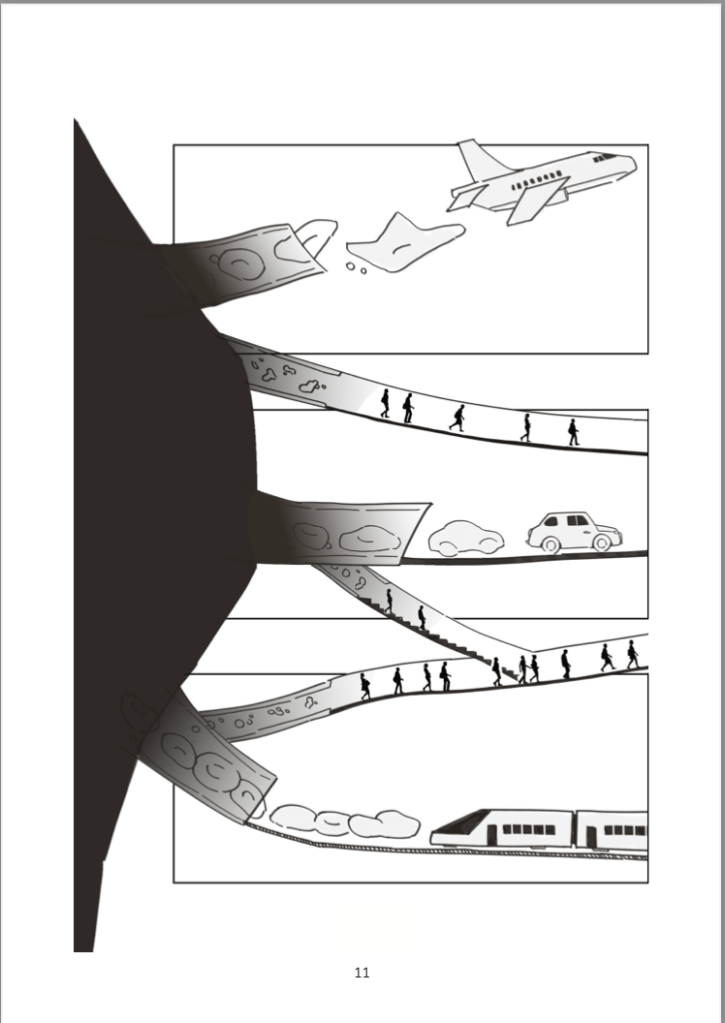
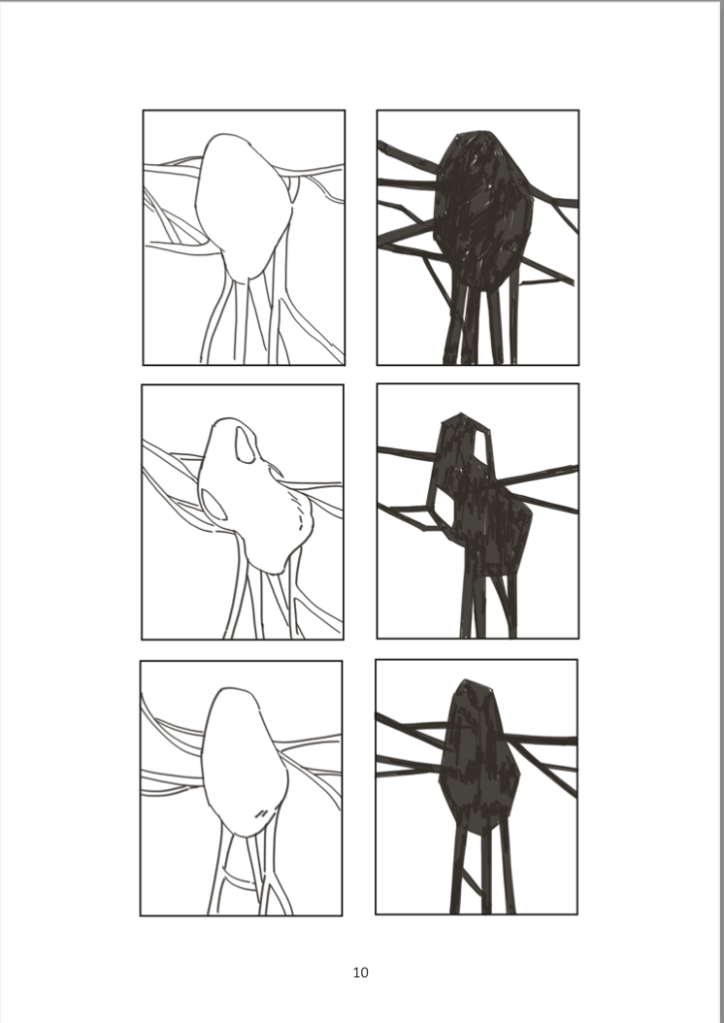
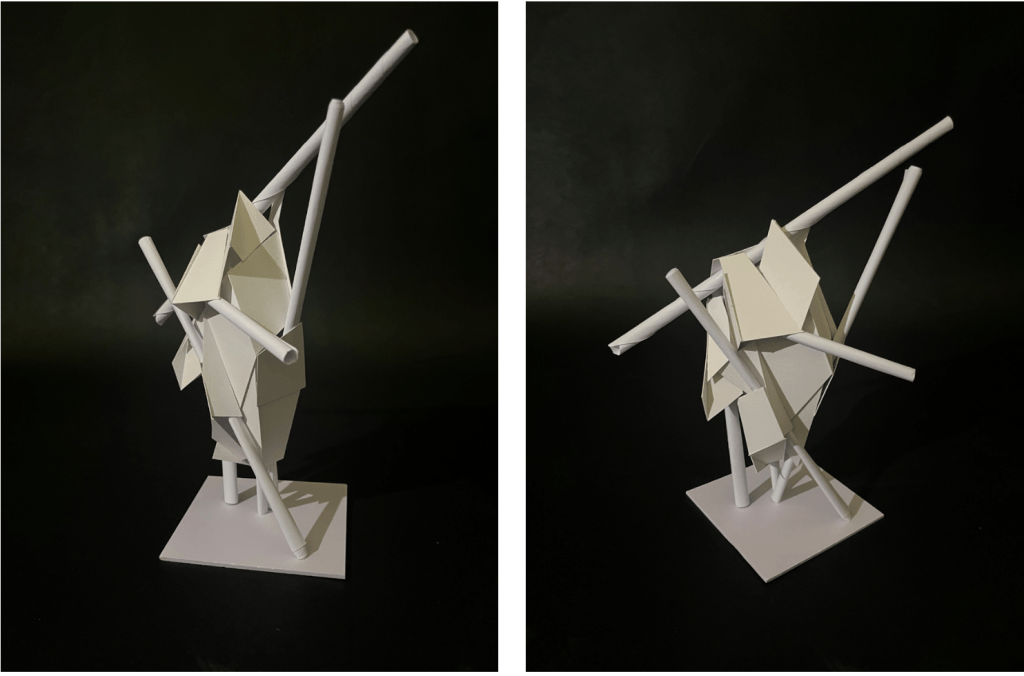
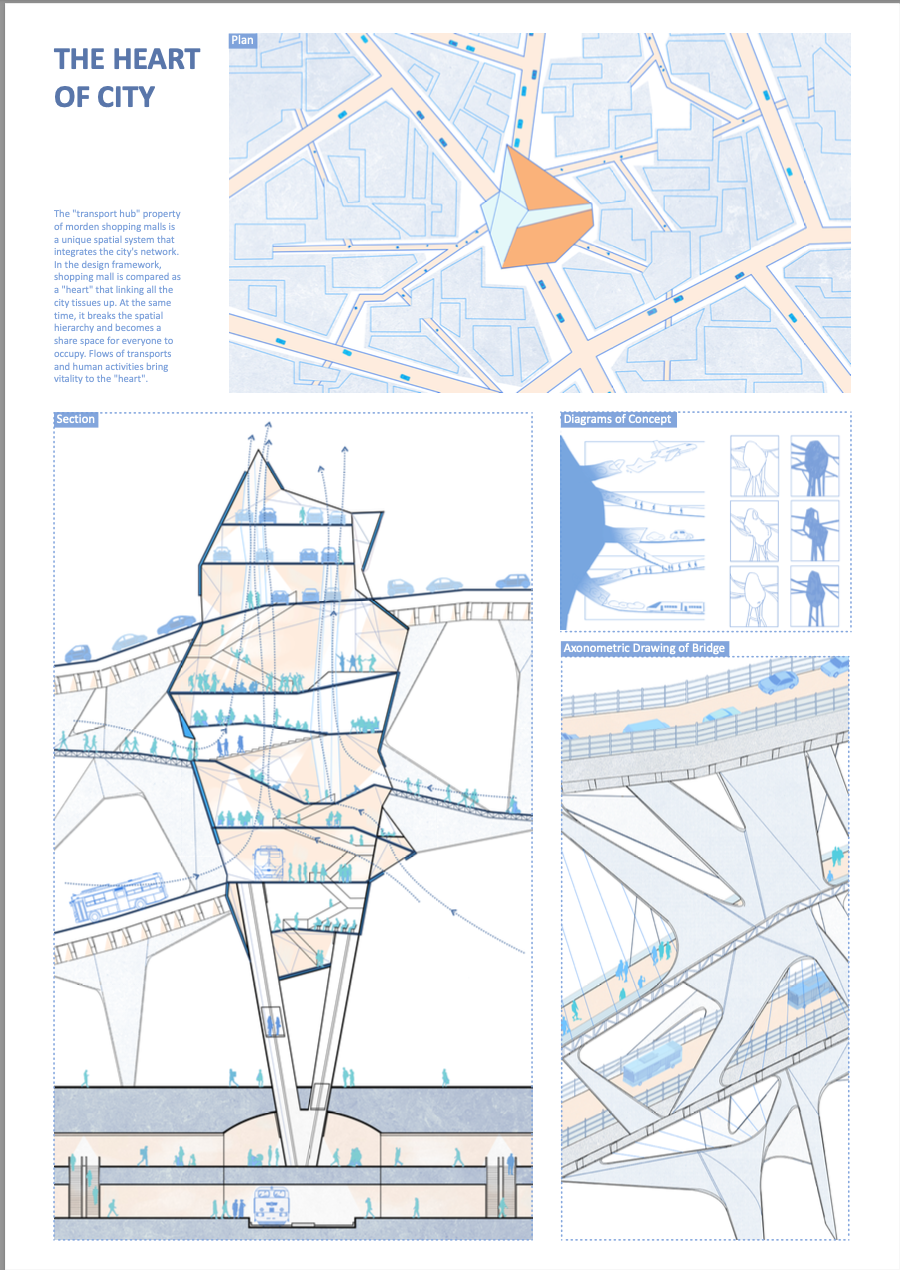
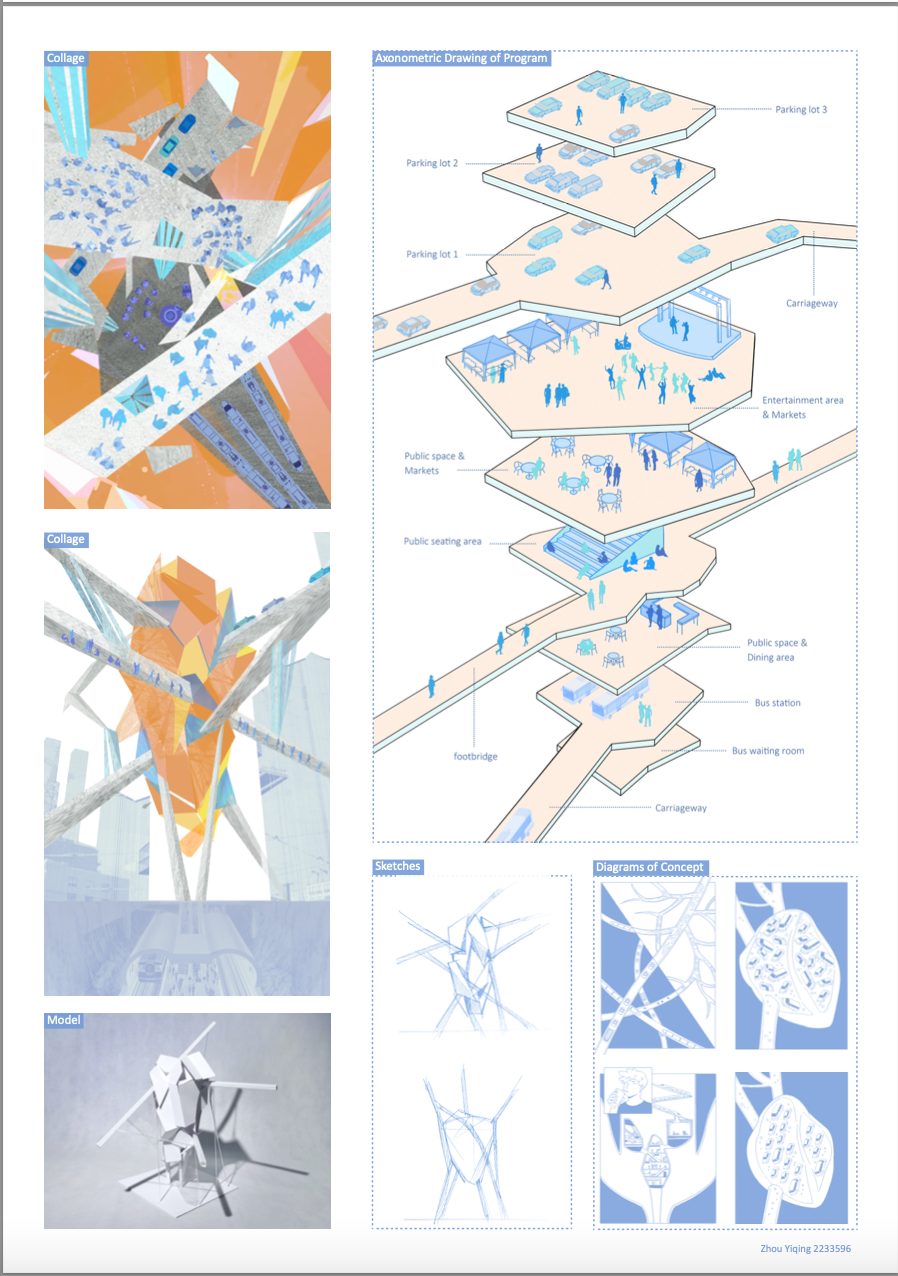
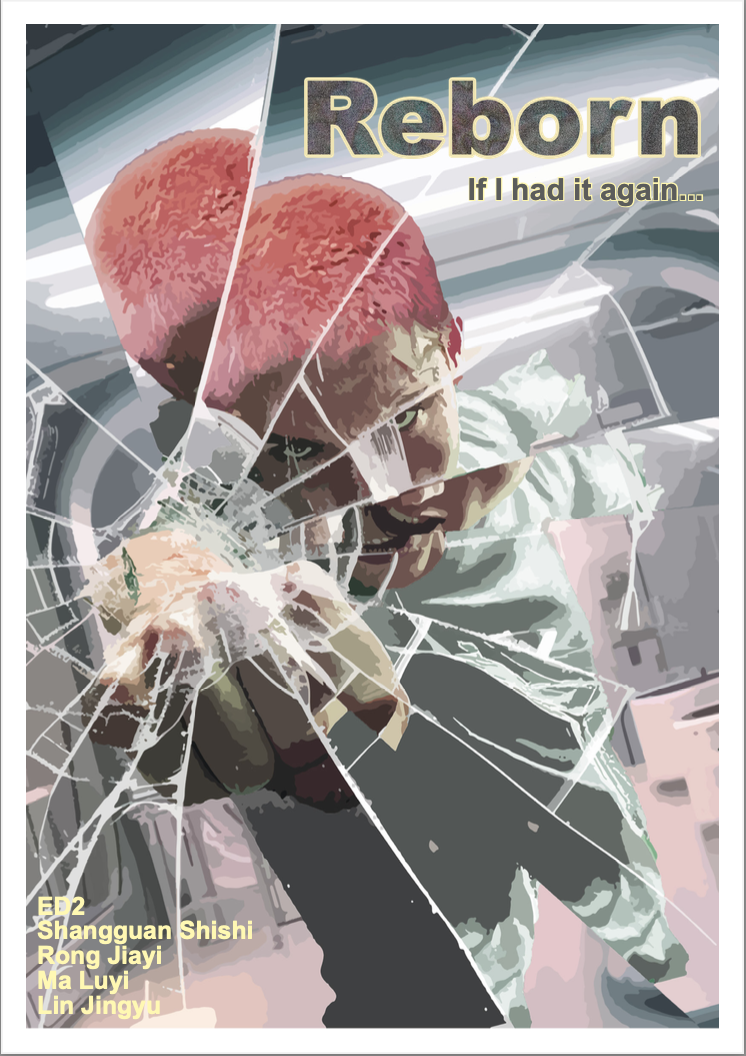
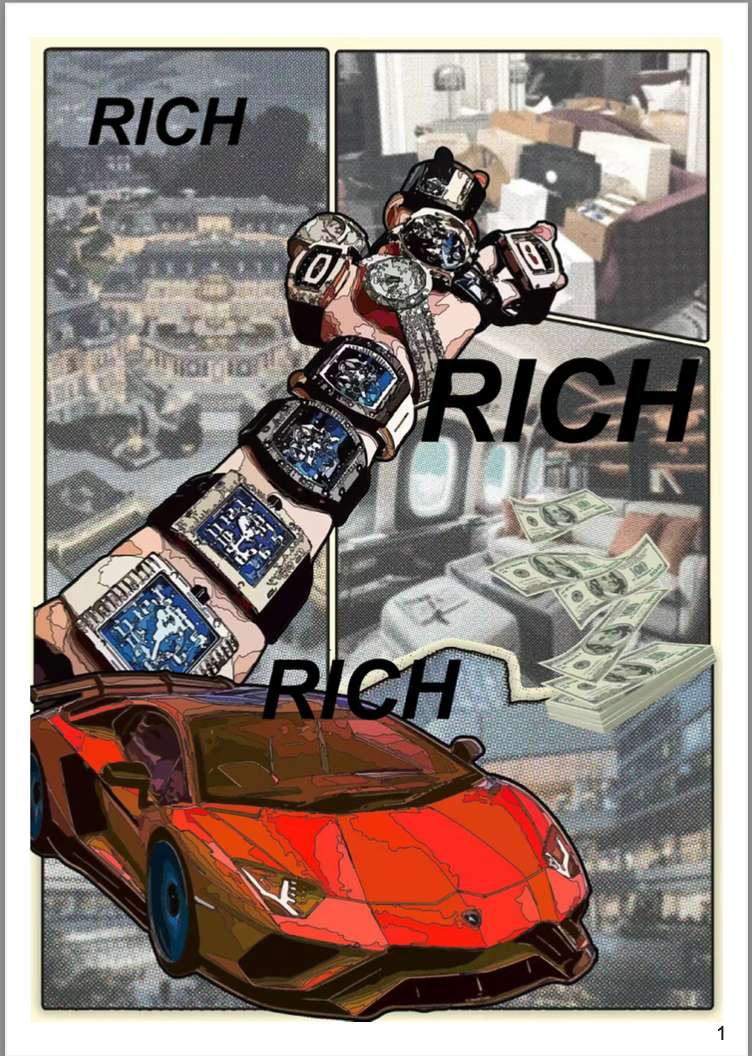
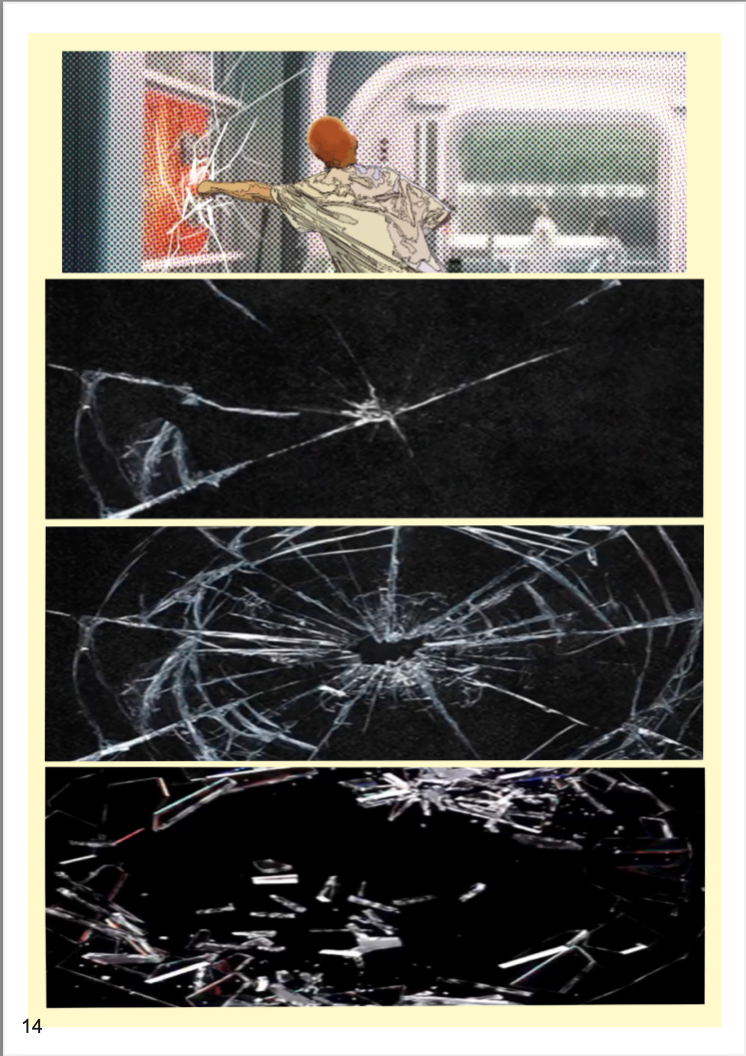
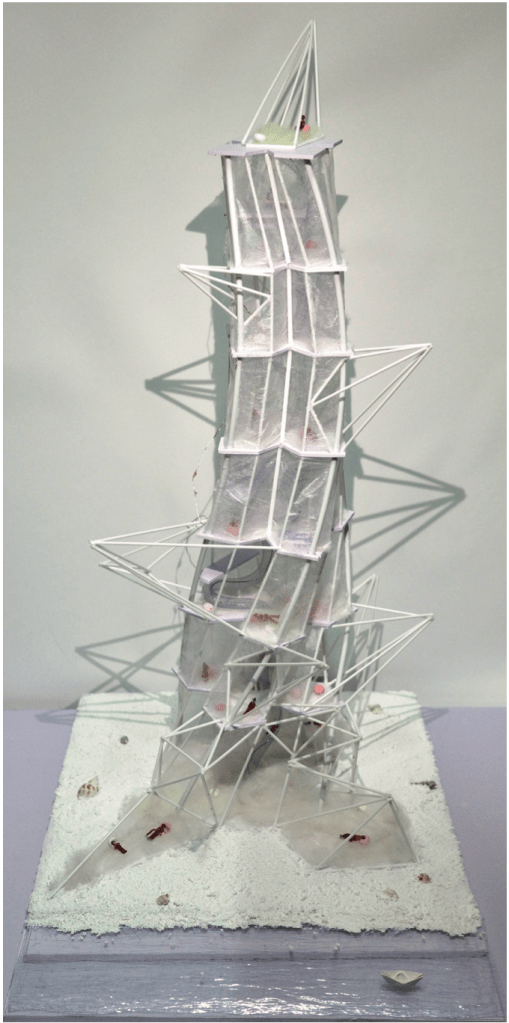
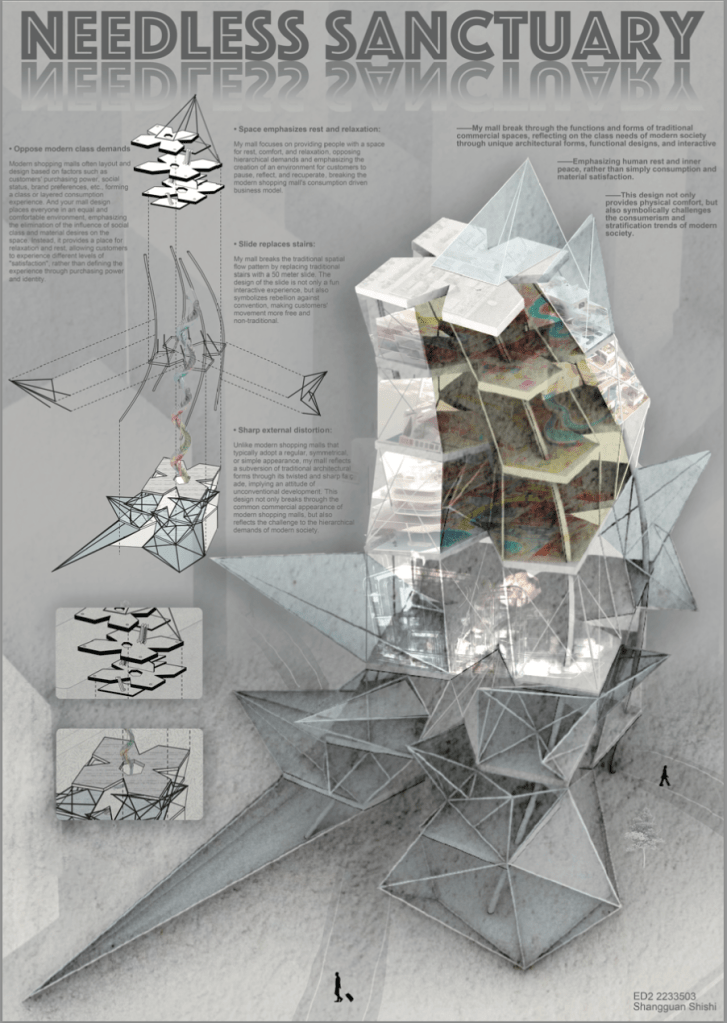
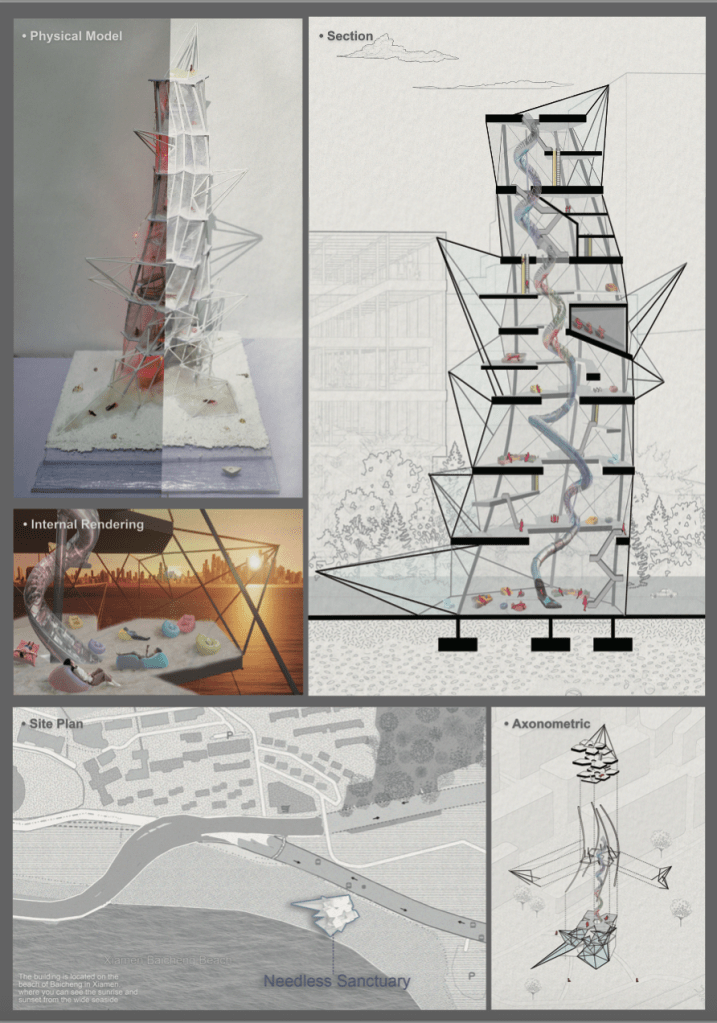
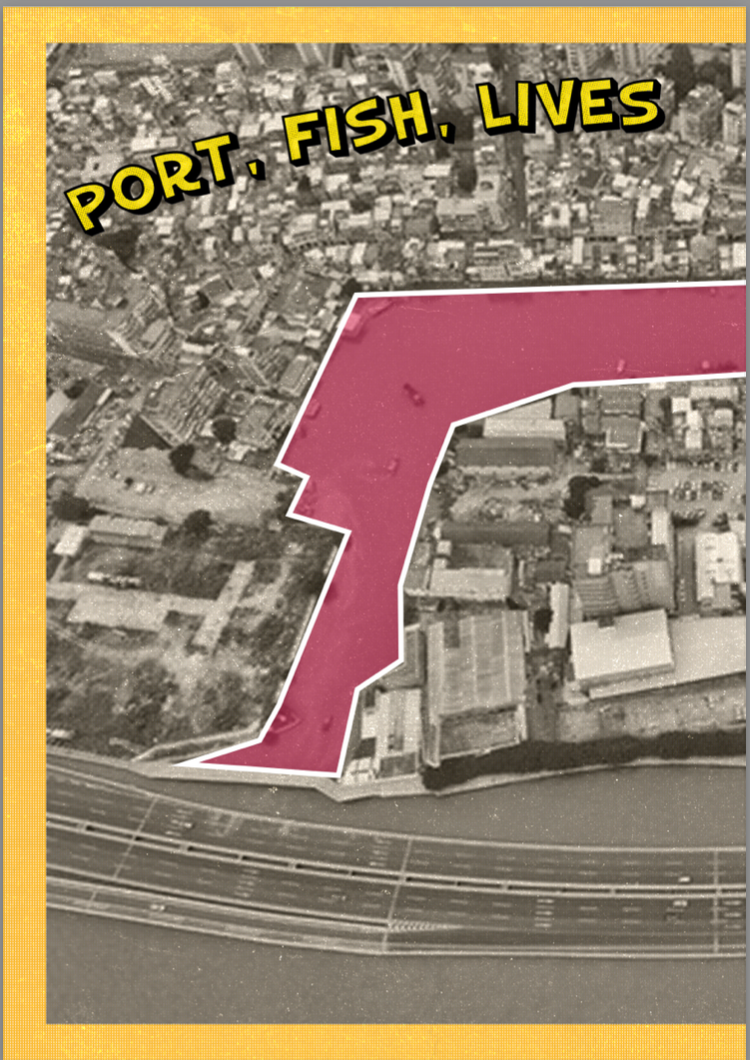
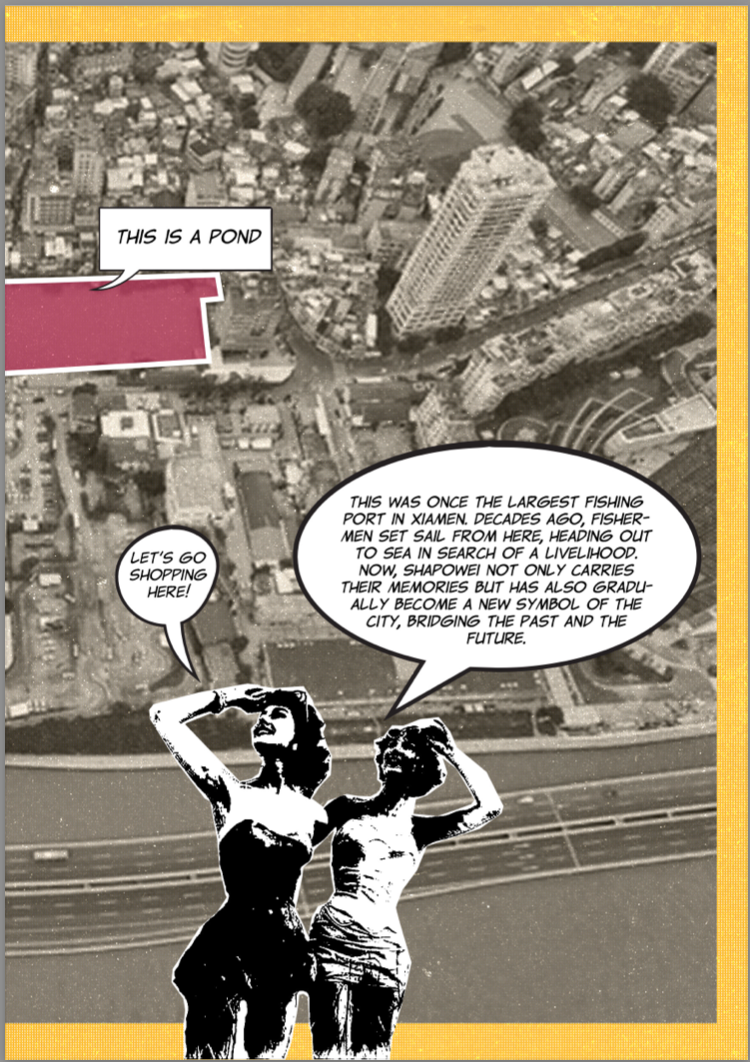
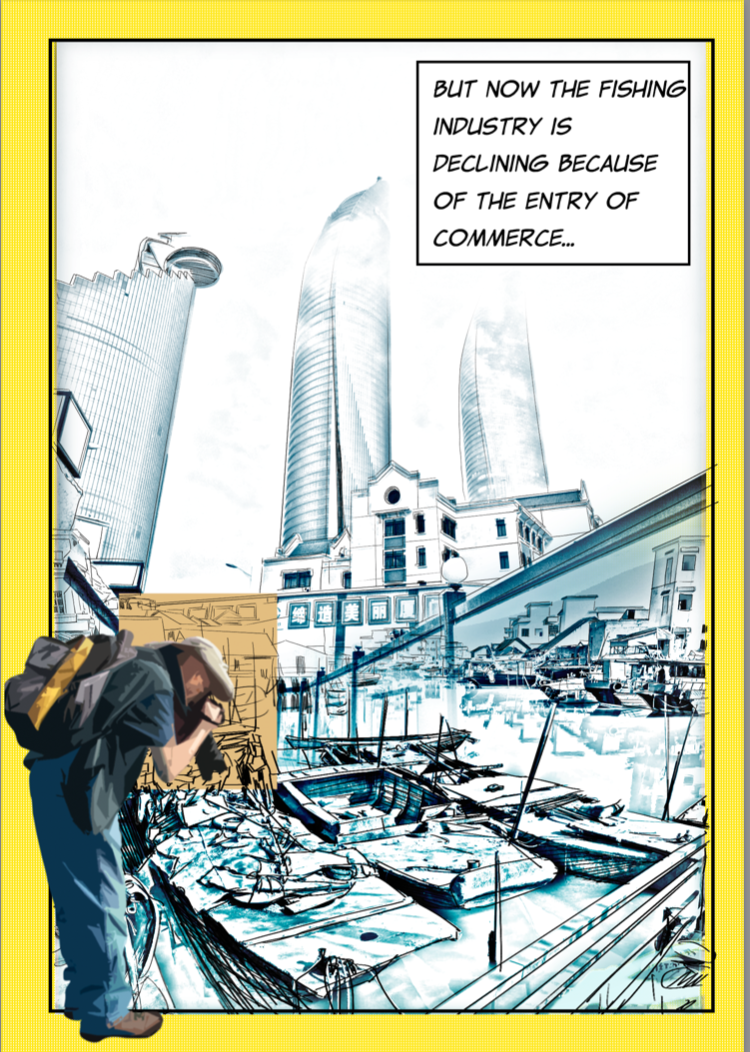
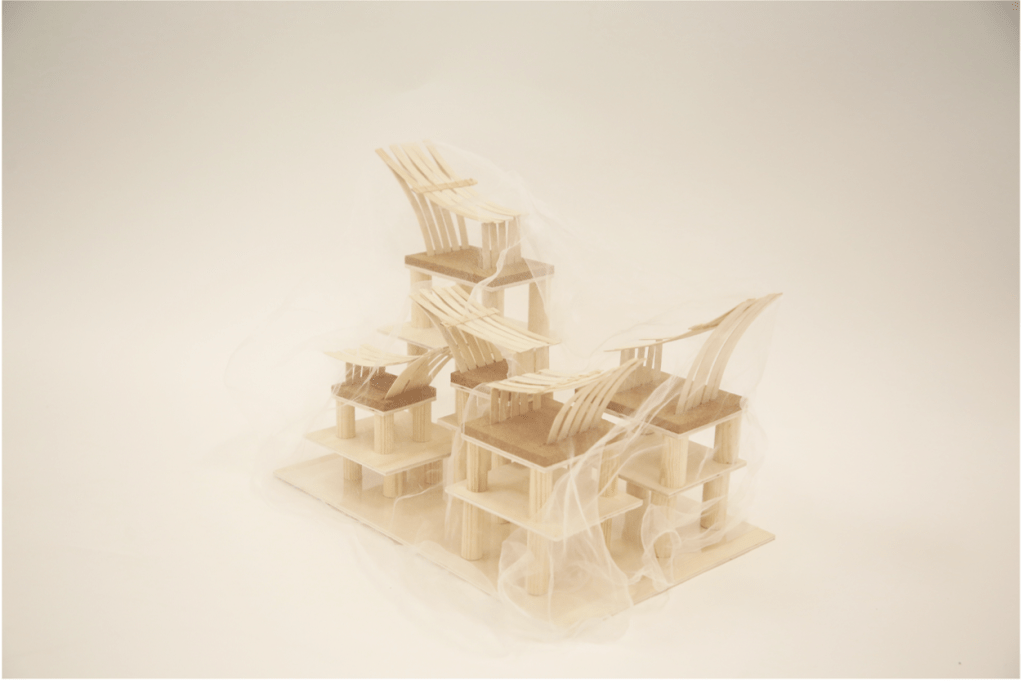
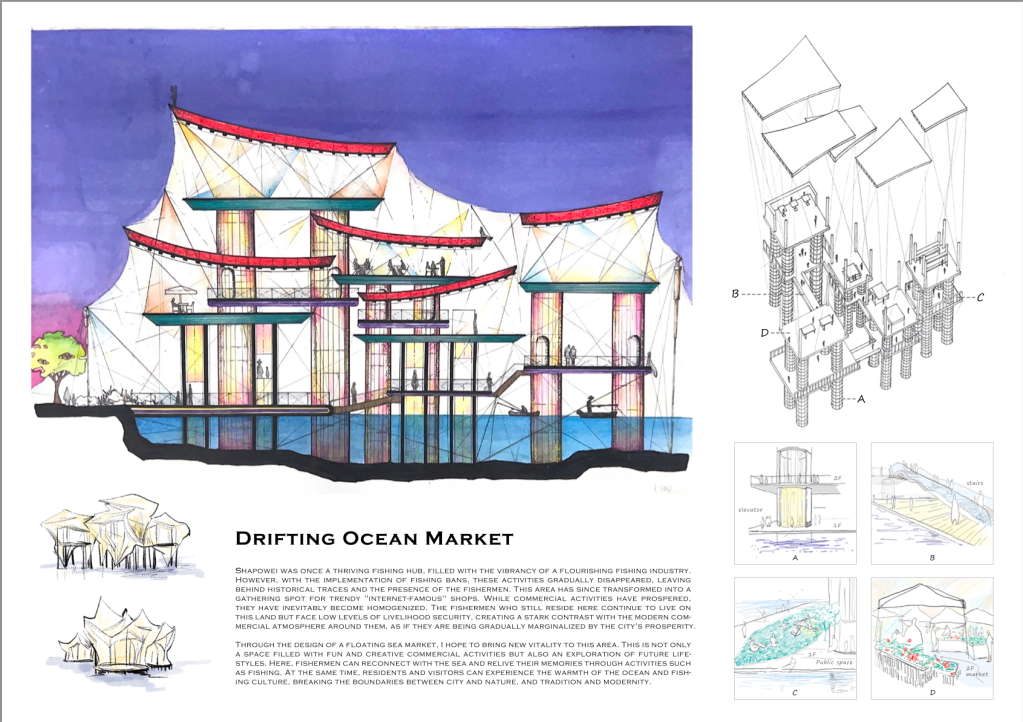
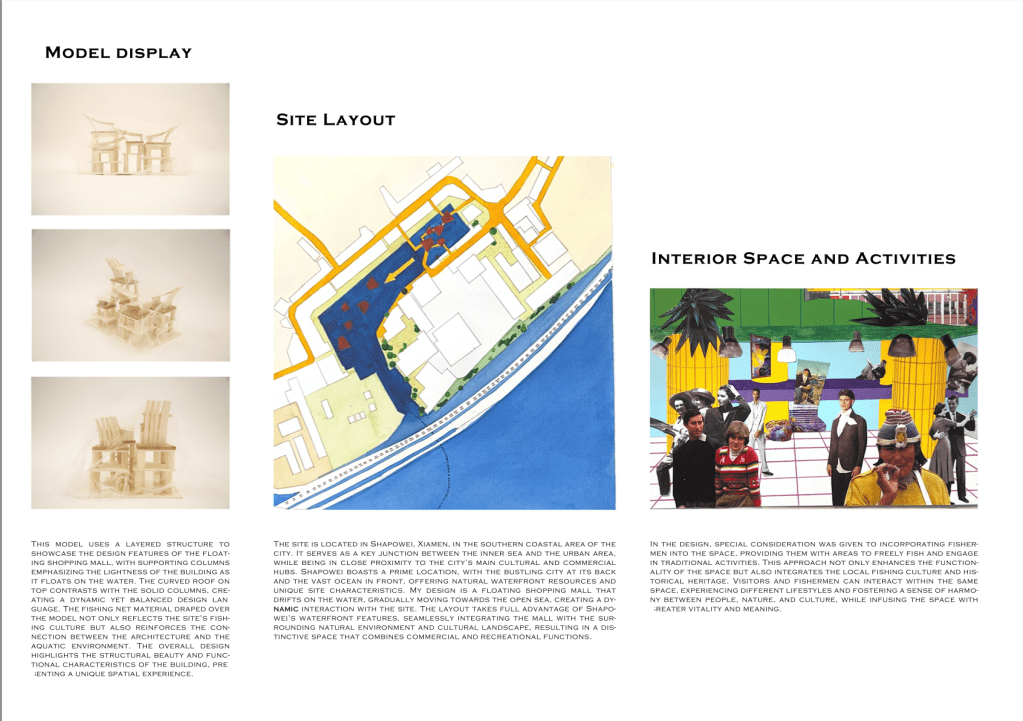
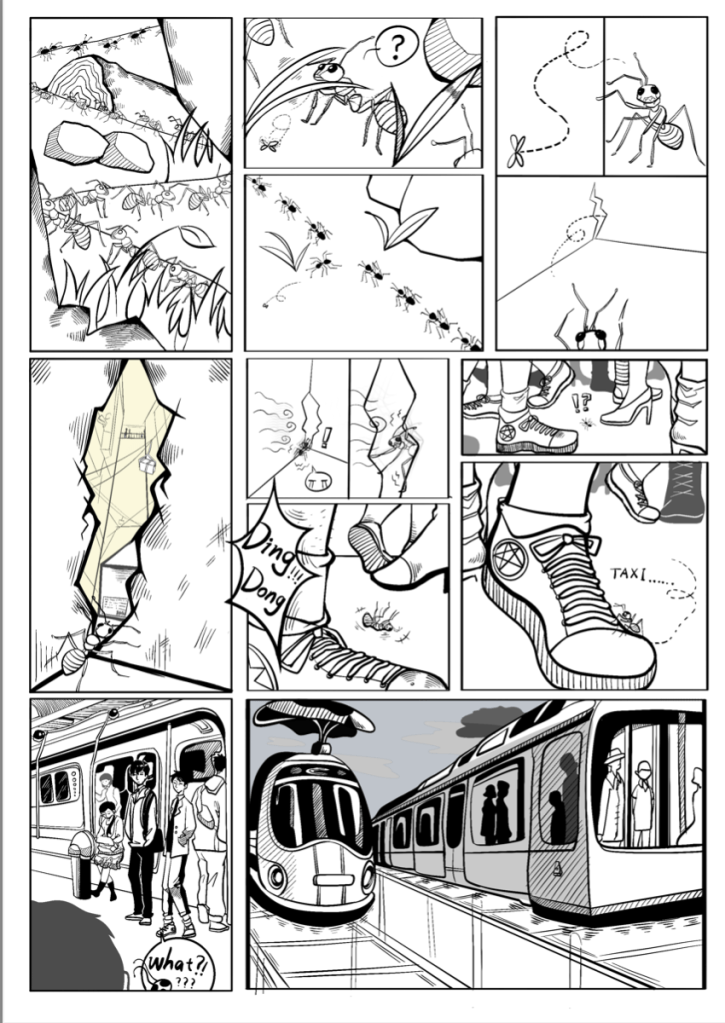
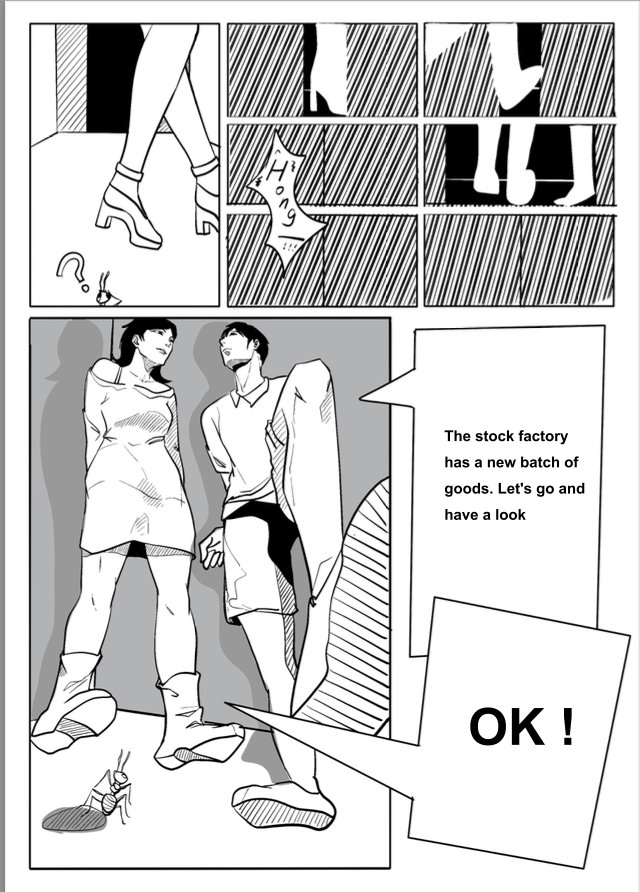
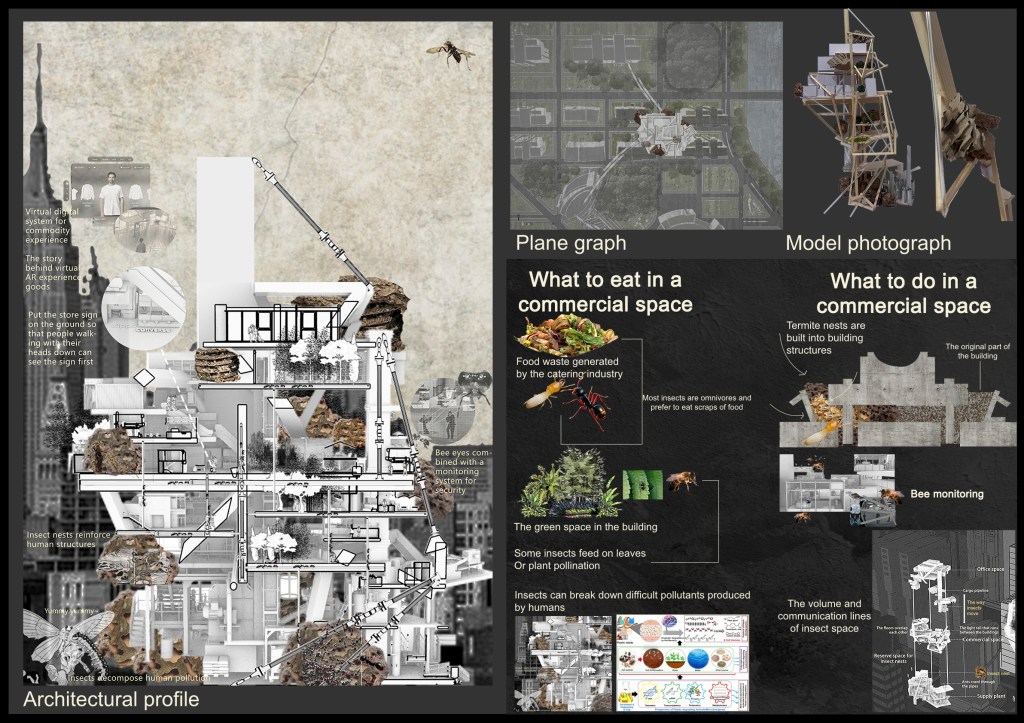
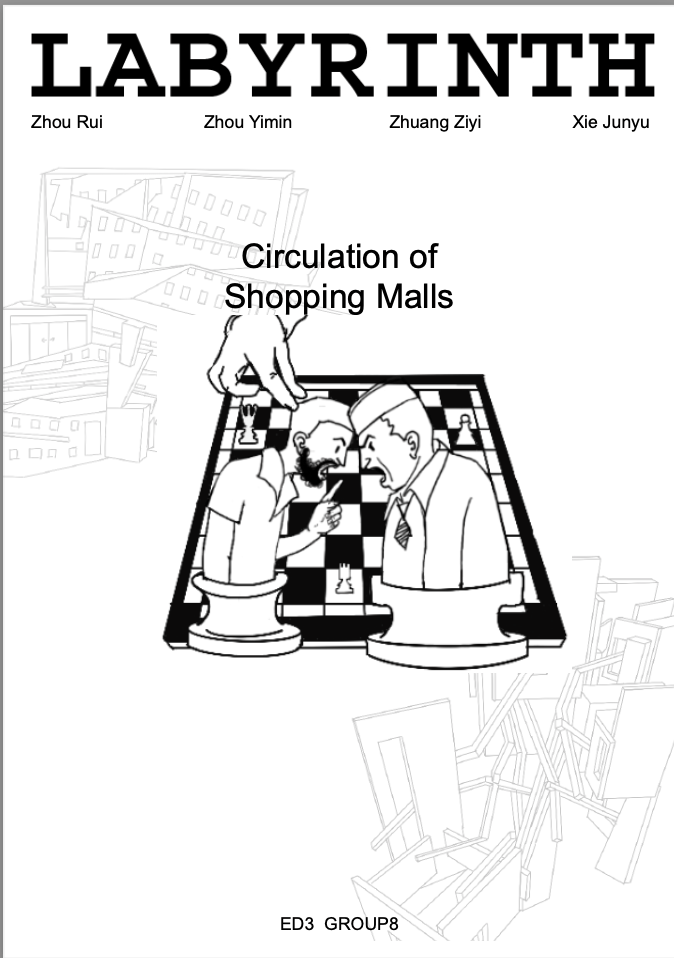
- First-Year Bachelor of Environmental Design – Body & Place
The ‘Body & Place’ unit offered an immersive experience, allowing students to observe, analyze, and abstract insights from their surroundings. It equipped students with the skills necessary for proactive research, critical inquiry, and the effective communication of conceptual ideas to diverse audiences. Building on their foundational design skills, students explored innovative ways to engage with their environment and examine the interactions between people, objects, and spaces.
Through studio practice, workshops, and fieldwork, students collaborated in teams to enhance their observational, communication, and graphical presentation skills. The resulting projects reflect their diverse and creative approaches to exploring, documenting, and reflecting on environmental concepts. These projects enabled students to transform research and theory into prototypes, fostering a learning process rooted in making and designing.
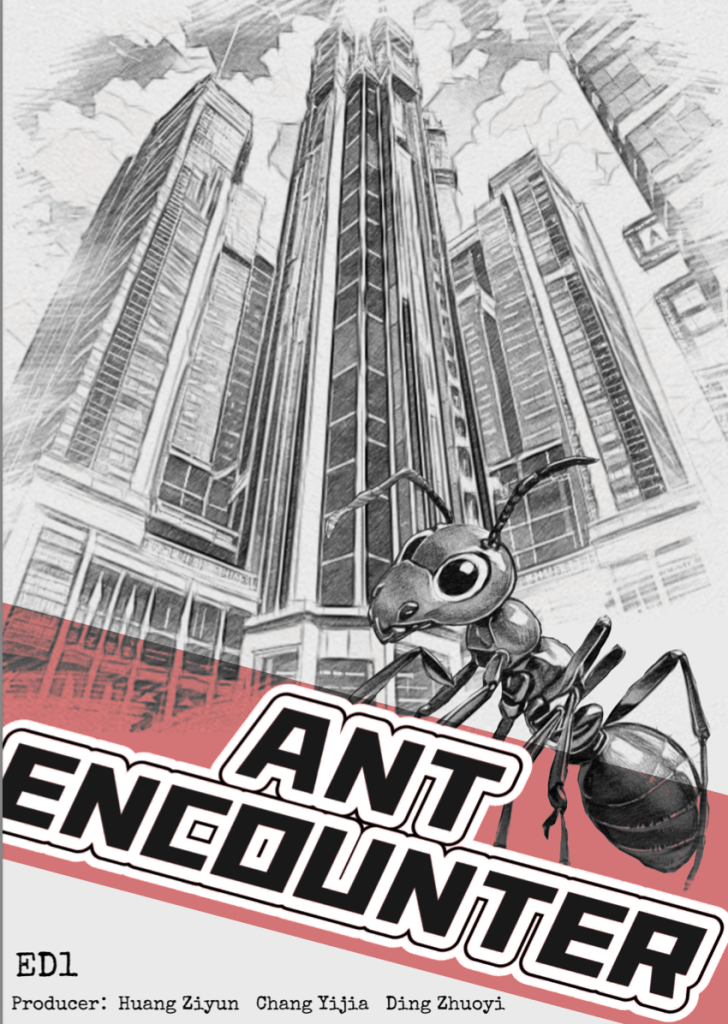
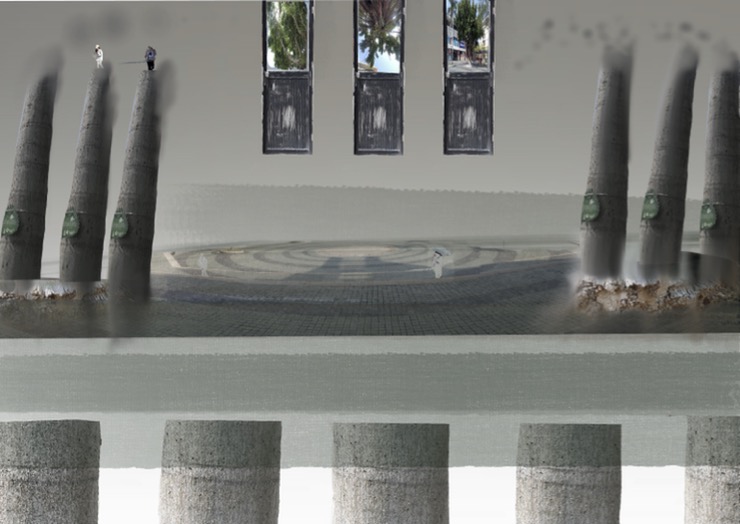
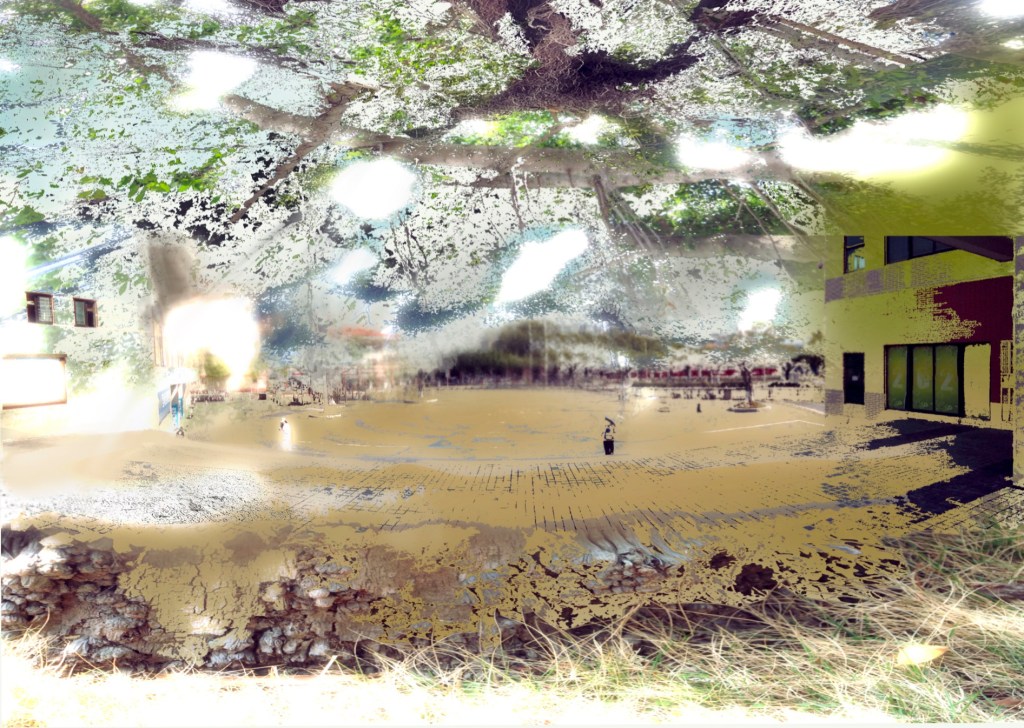
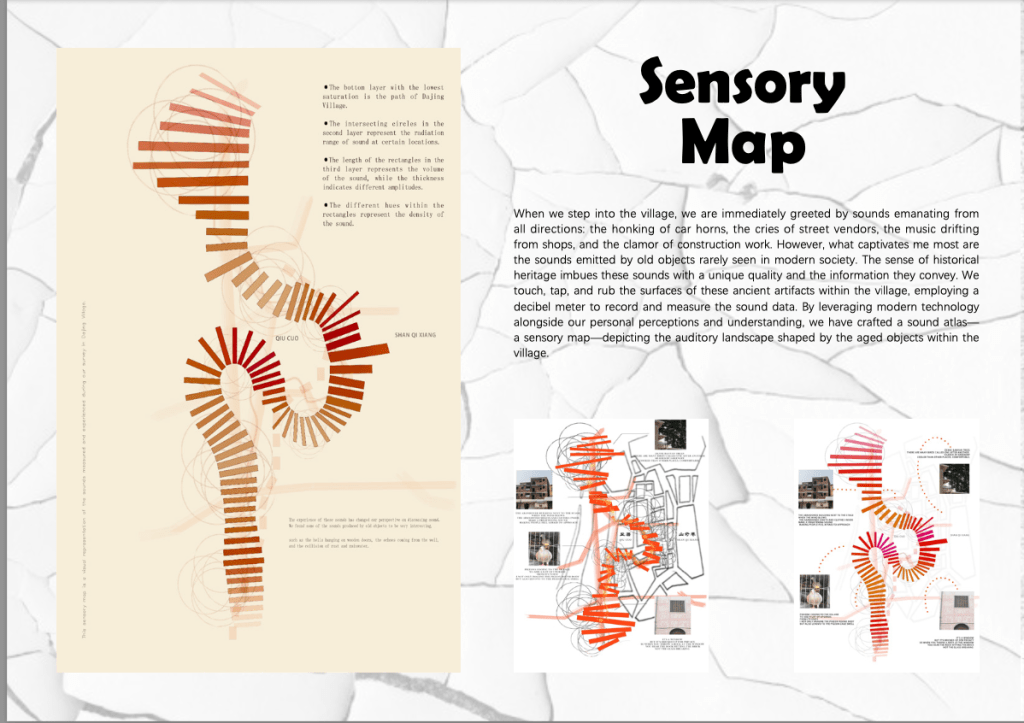
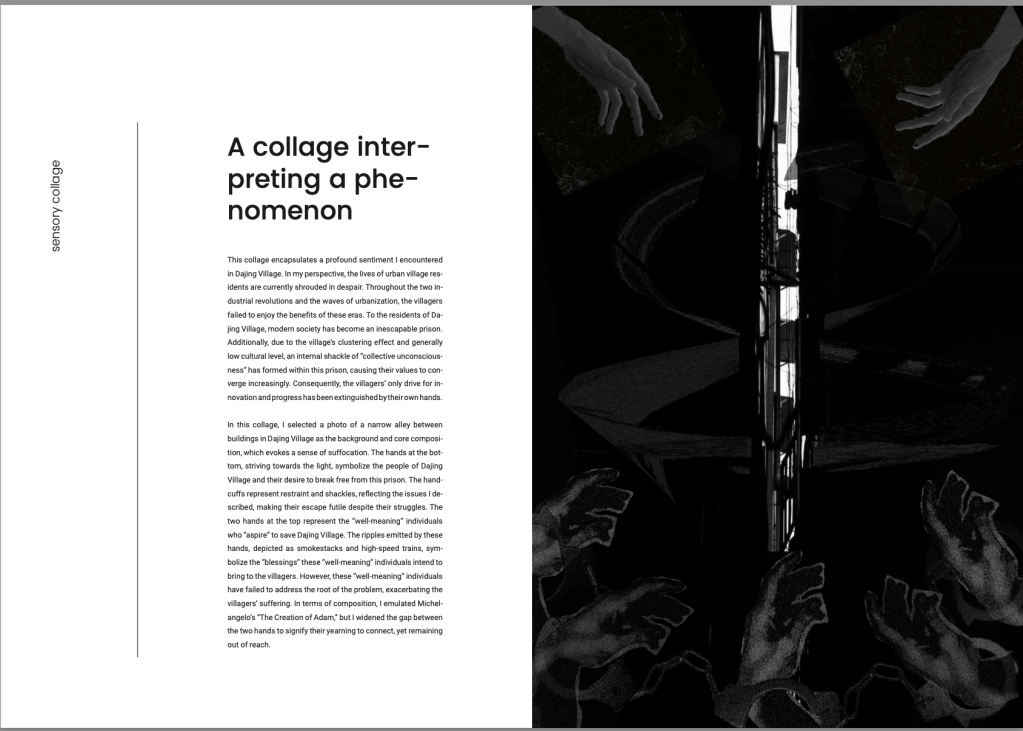
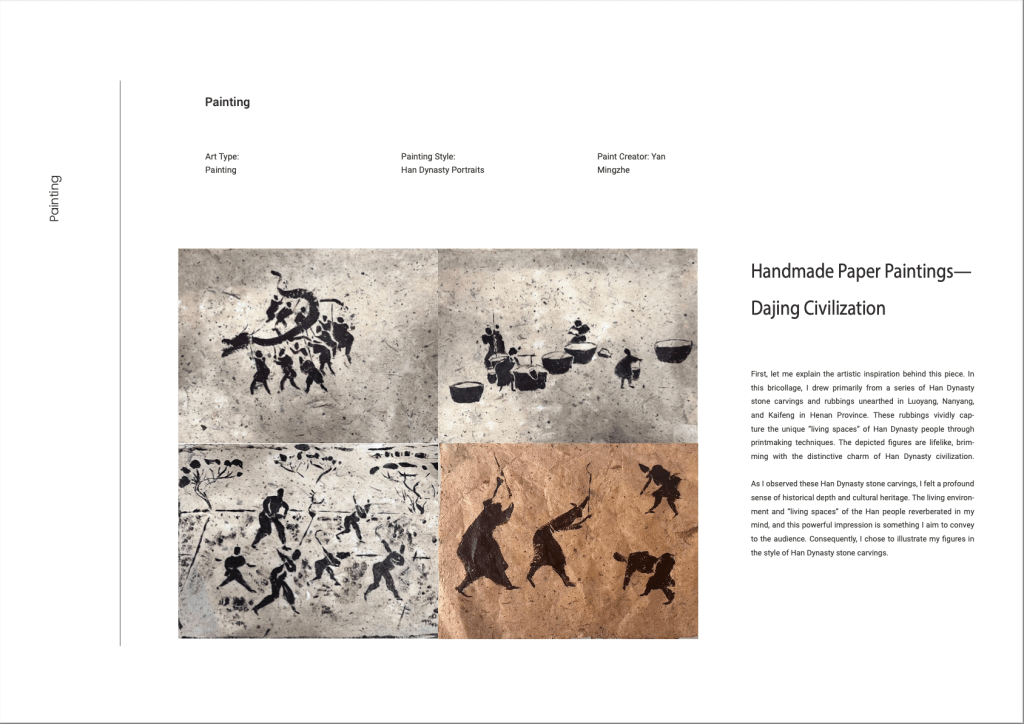
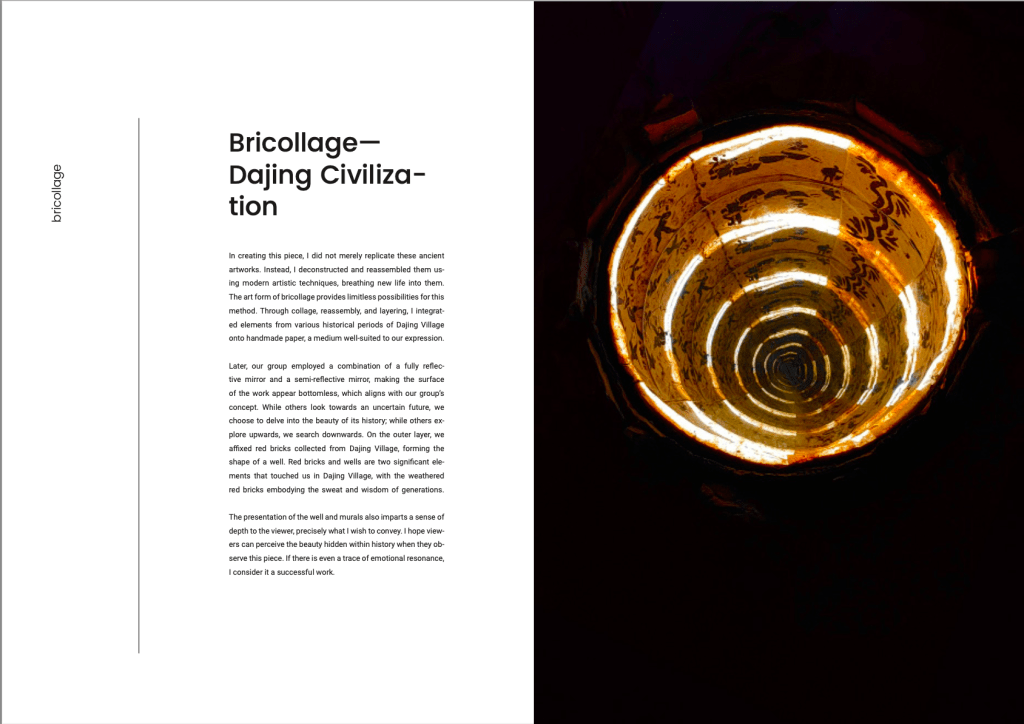
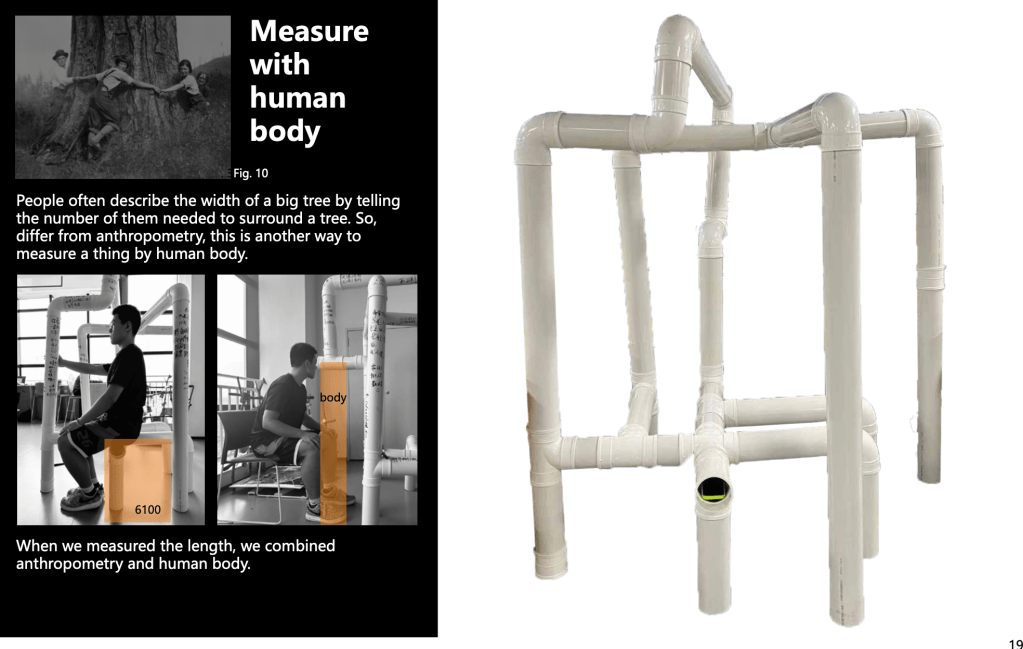
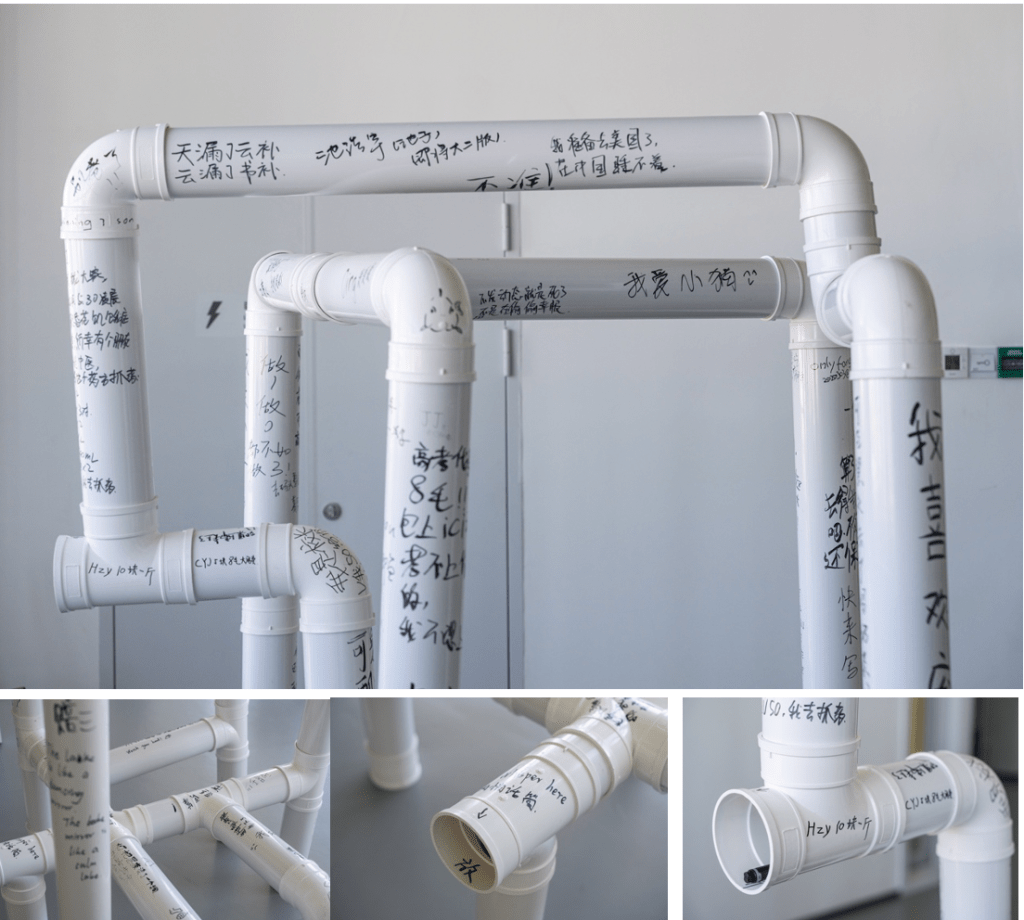
The unit emphasized understanding the often invisible and complex qualities of environments shaped by ecological, socio-cultural, sensory, and experiential factors. Students conducted extensive ethnographic research, focusing on bodily experiences and sensory navigation. This research, documented through various media, informed the installations and bricolages, creatively exploring sensory experiences within the built environment.
Experience of Place
Yuhan Zheng
Sensing and Sharing spaces
“Tell Sparta, traveler, We have followed the orders, And lie here in eternal rest.” — Simonides of Ceos (480 BC)
Mingzhe Yan
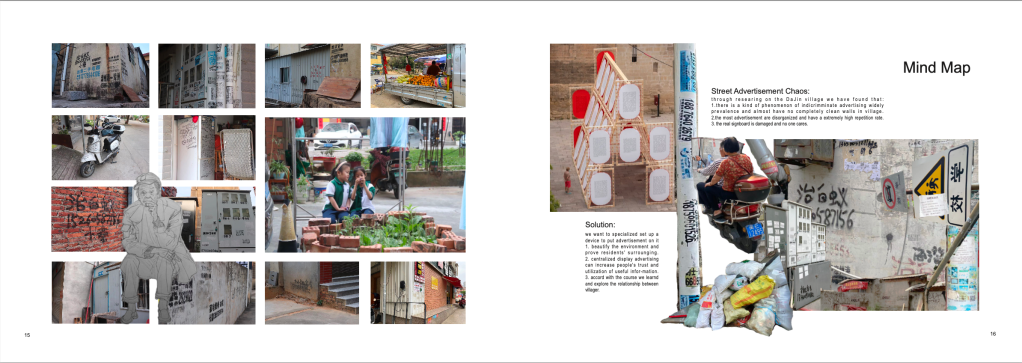
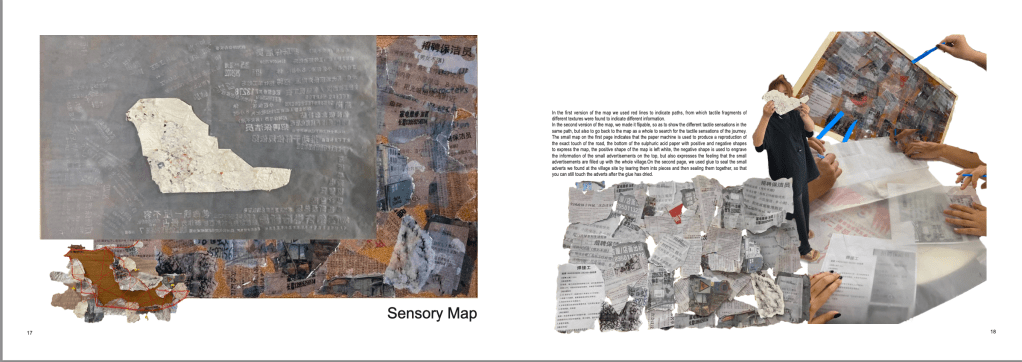
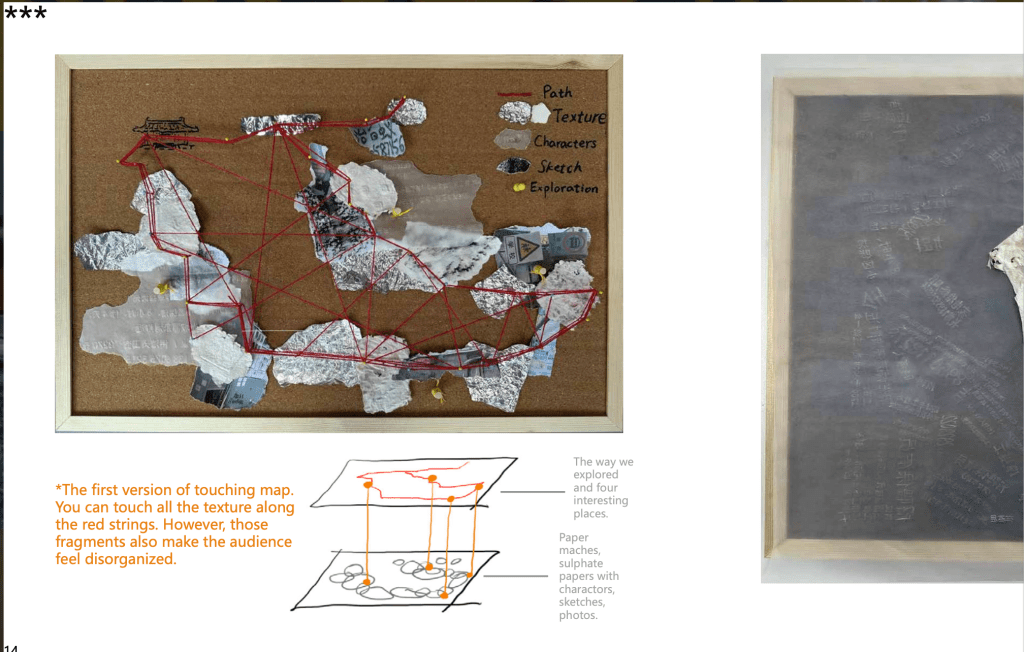
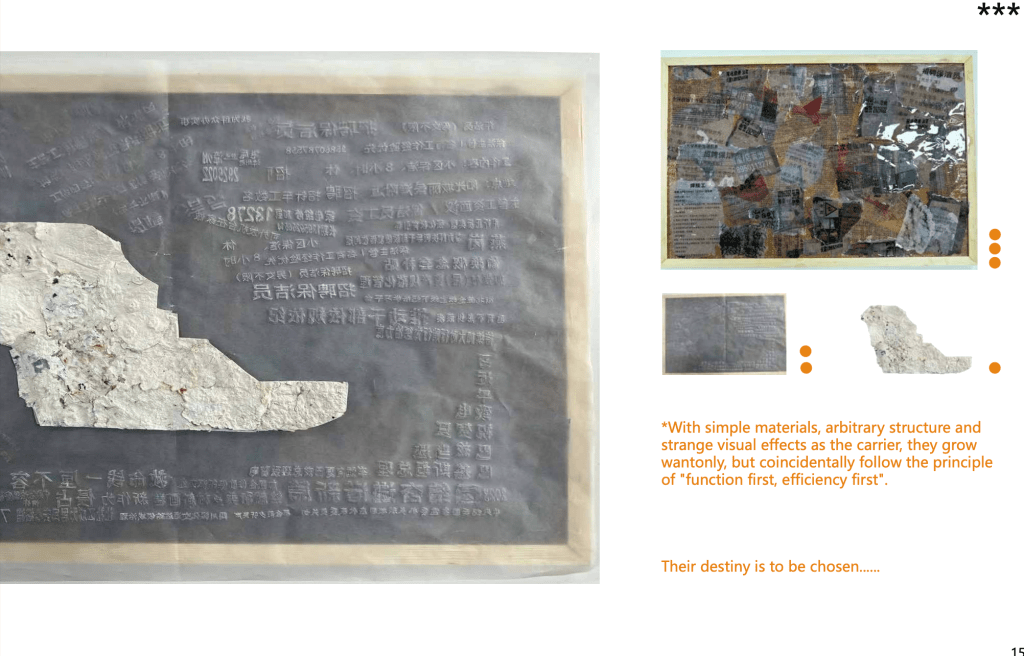
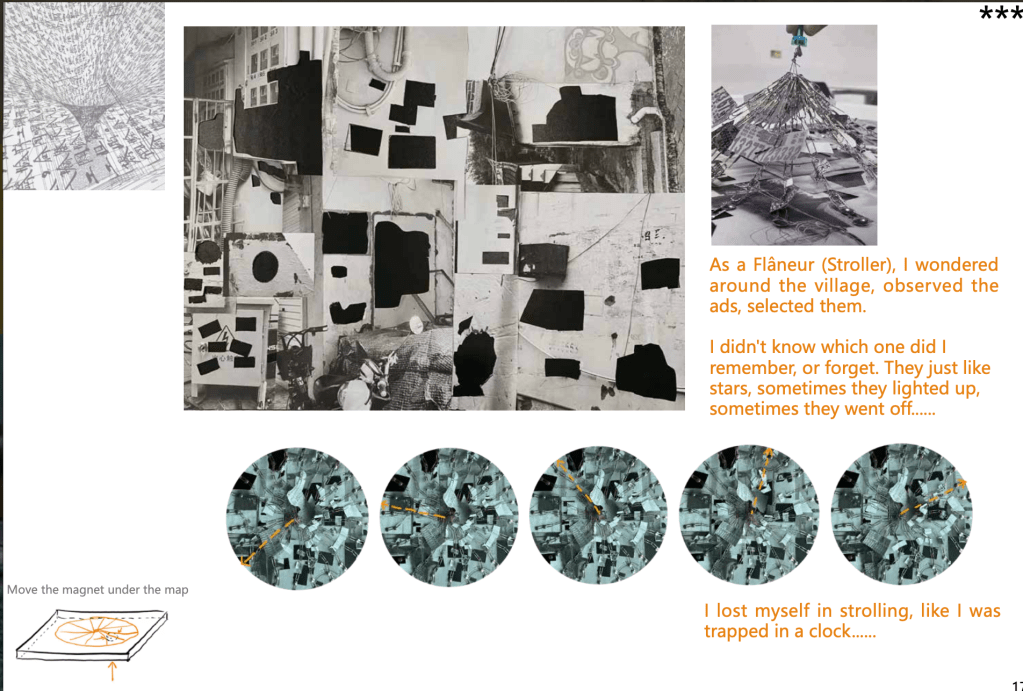
As a Flâneur, I wandered through the village, observing and selecting ads along the way. I never knew which ones I would remember again—they were like stars, sometimes flickering to life, other times fading away.
Sun Jiyu and Dong Xiaxi
 n-amini